

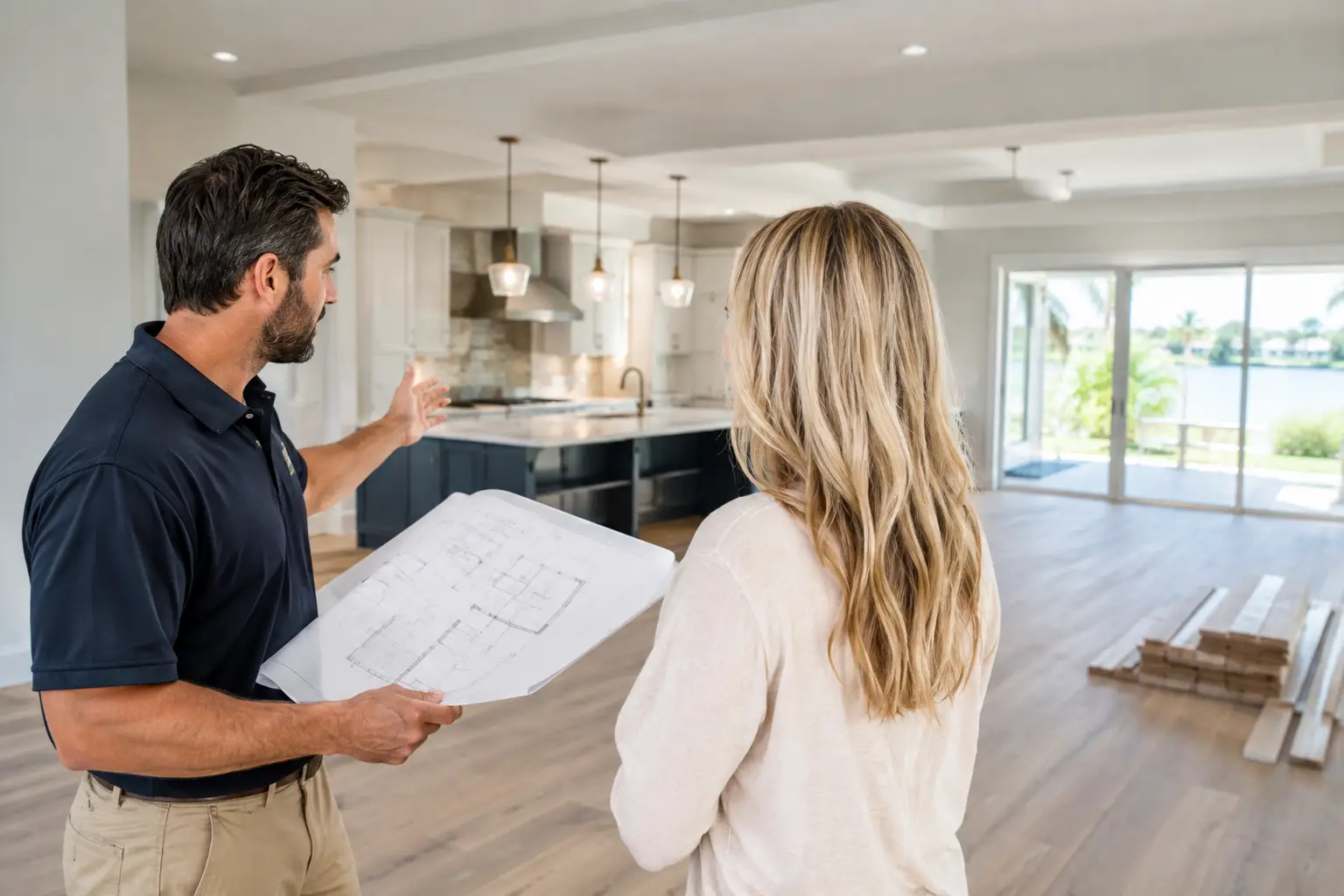
A whole-home renovation changes far more than finishes. It changes how a house receives guests, handles Florida weather, connects rooms to the pool or patio, and supports everyday life for years to come. Choosing a whole home renovation contractor Sarasota homeowners can rely on is therefore about more than finding a builder with available crews. It is about selecting a team that can see the property as one complete environment.
In Sarasota, that perspective matters. Many homes have strong bones, desirable locations, and outdoor areas with real potential, yet their layouts, systems, and curb appeal no longer match the way their owners live. A thoughtful renovation can modernize the interior while improving circulation, outdoor living, drainage, landscaping, and long-term property value.
Start With the Property, Not the Wish List
A successful whole-home project begins with an honest look at the home and site. Before choosing cabinetry, tile, or paint colors, homeowners should understand what the property can support. Existing structure, ceiling heights, electrical capacity, plumbing locations, roof condition, lot drainage, and access all affect the scope and cost of renovation.
Sarasota properties also bring site-specific questions. A home near the water may require a closer look at exposure, elevation, materials, and permitting considerations. An older neighborhood may have mature trees, established setbacks, or a home whose character deserves to be preserved rather than erased. A newer residence may need less structural work but benefit from a more intentional relationship between the interior and backyard.
This is why a contractor should ask detailed questions early. How do you use the house now? Which rooms sit empty? Do you entertain outdoors? Are you planning to remain in the home for decades, or are you preparing it for a future sale? The answers shape priorities. A family focused on daily function may place the kitchen, storage, and bedroom layout first. A homeowner creating a retreat may prioritize a primary suite, covered lanai, pool setting, and landscape lighting.
What a Whole Home Renovation Contractor in Sarasota Should Coordinate
Whole-home work is rarely one trade at a time. It involves connected decisions, and those decisions have consequences beyond the room where they begin. Moving a kitchen wall, for example, may affect structural support, lighting plans, flooring transitions, HVAC distribution, and the view toward the outdoor living area.
A capable whole home renovation contractor in Sarasota should coordinate design, preconstruction planning, permitting, scheduling, construction, and final detailing. The strongest partners also understand that the house does not end at the exterior wall. Driveways, walkways, planting, irrigation, patios, outdoor kitchens, fireplaces, retaining walls, and pools should be considered alongside the renovation rather than treated as disconnected future projects.
That integrated approach reduces visual and practical compromises. It helps prevent a newly renovated interior from opening onto an outdated patio, a poorly lit yard, or landscaping that no longer suits the architecture. It also allows site work to be planned around construction access and completed in the correct sequence.
For a project with extensive exterior improvements, working with a firm that brings landscape architecture and construction knowledge under one roof can be especially valuable. The Berryman Design Group approaches residential property through connected Design, Build, Landscape, and Maintenance services, helping clients consider both the home and the grounds from the outset.
Design for Sarasota Living, Not a Generic Floor Plan
The best renovation plans feel tailored to the homeowner and the place. Sarasota living often centers on daylight, outdoor gathering, and easy movement between interior rooms and exterior spaces. That does not mean every renovation needs a wall of folding glass doors or a resort-scale pool. It means the design should make deliberate choices about shade, privacy, views, airflow, and the way people arrive and move through the property.
A kitchen renovation may be more successful when it improves sight lines to the backyard and creates a natural path to an outdoor dining area. A living room addition may need covered transitions that provide relief from sun and rain. A landscape plan may use layered planting and lighting to create privacy without making the yard feel closed in.
Materials deserve the same level of thought. Coastal humidity, strong sun, rain, salt exposure in certain locations, and everyday maintenance needs can influence selections for exterior finishes, pavers, cabinetry, hardware, and planting. A beautiful material that requires more care than the owner wants to provide can become a source of frustration. The right choice depends on the property, exposure, budget, and desired level of maintenance.
Establish the Budget Before Construction Starts
Homeowners often ask what a whole-home renovation will cost, but there is no responsible one-size-fits-all answer. The range depends on square footage, structural changes, age and condition of the home, finish level, site work, and how much of the home remains occupied during construction.
The more useful question is how to build a budget that reflects the project honestly. Start by separating the work into major categories: design and engineering, permits, demolition, structural work, mechanical systems, interior finishes, exterior improvements, and contingency. This does not make the number smaller, but it makes decisions clearer.
A contingency is particularly important in an existing home. Once walls or floors are opened, older wiring, plumbing issues, water damage, or structural conditions may require attention. A well-planned project accounts for that possibility rather than treating every discovery as a surprise.
It is also wise to identify the non-negotiables early. If opening the kitchen to the living area, creating a first-floor primary suite, or rebuilding the pool terrace is central to the goal, protect those priorities before spending heavily on secondary upgrades. Conversely, some finish choices can be adjusted without weakening the overall design.
Ask How the Team Manages Decisions and Change
The quality of a renovation is shaped as much by communication as craftsmanship. Homeowners should understand who will lead the project, how often they will receive updates, when selections must be finalized, and how changes are documented and priced.
Ask direct questions before signing a contract. Who is responsible for permitting and inspections? How are allowances handled? What happens if concealed conditions are found? How will the team protect occupied areas of the home? Who coordinates the landscape, hardscape, and exterior lighting if those are part of the plan?
Clear answers are a good sign. Whole-home renovation has moving parts, and no contractor can eliminate every unknown in an existing structure. What an experienced team can do is establish a process for identifying issues, presenting options, and keeping decisions moving without losing sight of the original vision.
Plan for the Home After the Renovation
A finished renovation should not create a maintenance burden that was never discussed. The landscape, irrigation, lighting, exterior materials, drainage features, and outdoor amenities all need a long-term care plan. This is especially relevant for seasonal residents, investment-property owners, and busy households that want the property to look polished without constant coordination.
Planning for maintenance during design can protect the investment. Select plants suited to the site, provide proper irrigation coverage, consider access for service, and use materials appropriate for the level of upkeep you expect. Good design does not simply photograph well on completion day. It continues to work through summer rains, changing seasons, and years of use.
The right renovation partner brings order to a complex undertaking while leaving room for imagination. When the house, outdoor spaces, and ongoing care are planned as one property, the result can feel less like a remodel and more like the home was always meant to be yours.