

-
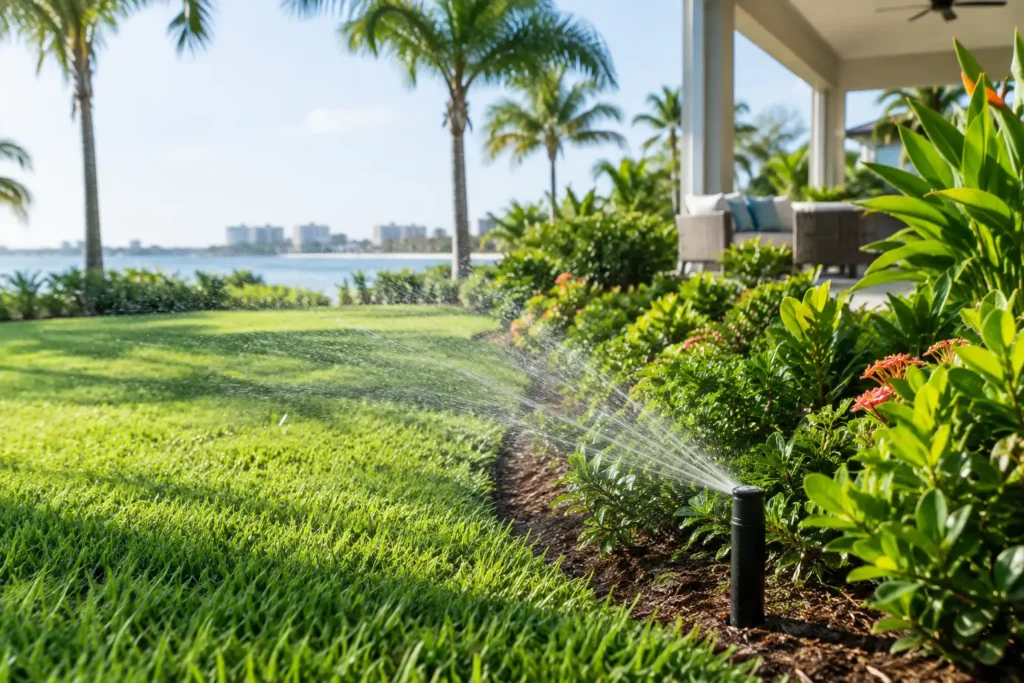
Smart Irrigation for Sarasota Outdoor Living
A Sarasota landscape can look perfectly healthy on Monday and show signs of stress by Friday. Between intense sun, sandy soil, summer downpours, salt exposure near the coast, and seasonal watering restrictions, a fixed irrigation schedule rarely gives a property exactly what it needs. Smart irrigation brings more precision to one of the most important systems supporting your home’s outdoor environment.
For homeowners who have invested in custom planting, mature palms, colorful beds, turf, lighting, pavers, pools, or outdoor living spaces, irrigation should do more than turn on at a set time each week. It should respond to actual conditions, protect the landscape investment, and avoid watering when Florida weather has already done the work.
What Smart Irrigation Actually Does
Smart irrigation uses a controller, sensors, weather information, or a combination of these tools to adjust watering schedules based on landscape conditions. Rather than operating on the same timer regardless of rainfall or temperature, the system can reduce, delay, or modify watering when conditions change.
The word “smart” can mean different things depending on the equipment. Some systems use local weather data to account for rainfall, humidity, temperature, and seasonal evapotranspiration. Others rely on rain sensors, soil moisture sensors, flow monitors, or mobile controls. The right approach depends on the property, its planting design, the existing irrigation infrastructure, and the homeowner’s expectations for control and maintenance.
A smart controller is not a substitute for thoughtful landscape design or a properly installed irrigation system. It is a better decision-maker for a system that already has the right zones, coverage, drainage, and plant selection. If a spray head is watering a driveway, a shrub zone is soaking turf, or a low area remains saturated after every storm, technology alone will not correct the underlying problem.
Why Sarasota Properties Need a More Responsive System
Sarasota lawns and gardens deal with conditions that can shift quickly. A hot, dry stretch may call for careful supplemental watering, while a week of afternoon thunderstorms can leave parts of the property overly wet. Running irrigation on a rigid schedule through both scenarios wastes water and can create avoidable stress for turf, trees, and ornamental plants.
Overwatering is often less obvious than a dry lawn, but it can be just as damaging. Excess moisture may encourage fungus, shallow root growth, weeds, nutrient runoff, and root decline in sensitive plant material. It can also leave homeowners puzzled when a landscape looks unhealthy despite receiving plenty of water.
Smart irrigation helps create a more measured response. A properly configured system can skip a cycle after meaningful rainfall, make seasonal adjustments as temperatures rise, and avoid delivering the same amount of water to every part of the property. That matters on homes with a mix of St. Augustine grass, ornamental beds, hedges, palms, citrus, native planting areas, and container gardens. These areas do not all need the same watering schedule.
For a high-value residential property, this is about more than reducing a utility bill. It is about preserving curb appeal, protecting carefully selected plant material, and keeping the outdoor environment ready for everyday enjoyment and entertaining.
The Components That Make Smart Irrigation Work
The controller is usually the center of the system. Modern controllers allow irrigation zones to be programmed independently and can use weather-based adjustments to change runtimes over the course of the year. Many also offer app access, giving homeowners or property managers the ability to check schedules, pause watering, or make adjustments without standing at the controller in the garage.
A rain sensor is a simple but valuable addition. It prevents irrigation from running during or shortly after rain, depending on how it is set. In Florida, where rainfall can be heavy but highly localized, a rain sensor provides useful on-site information that a weather forecast alone may miss.
Soil moisture sensors add another level of accuracy by measuring conditions in the root zone. They can be particularly useful in specialized planting beds or areas where soil conditions vary across the property. However, placement matters. A poorly located sensor can produce misleading information, especially in landscapes with varied sun exposure, mulch depth, slope, or soil amendments.
Flow monitoring can help identify problems that are otherwise difficult to catch. An unexpected increase in water use may signal a broken line, damaged valve, leaking head, or other issue. On larger properties or homes that are vacant part of the year, early leak detection can prevent a small irrigation failure from becoming a significant landscape or water-use problem.
Start With Zones, Not Gadgets
Before choosing equipment, consider how the landscape is divided into irrigation zones. This is where a professional assessment makes a meaningful difference. A healthy irrigation strategy begins with grouping plants that have similar water needs rather than grouping them simply because they are located near one another.
Turf should generally be zoned separately from landscape beds. Established trees and palms often have different needs from annual color or newly installed shrubs. Shaded areas dry more slowly than open lawn, while plantings next to pools, walls, pavers, and driveways can experience added heat. These conditions affect both how much water a zone needs and how often it should run.
A smart controller can only make intelligent adjustments within the structure it is given. If one zone combines lawn, drought-tolerant plants, and thirsty flowering material, the controller still has to choose one schedule for all of them. Correcting zones may require changes to valves, piping, heads, or drip lines, but it can dramatically improve landscape performance over time.
Drip irrigation deserves particular attention in planting beds, containers, and narrow foundation areas. It applies water closer to the root zone and can reduce overspray on walls, walkways, and hardscape. It is not the right solution for every area, and it requires regular inspection for clogs, damage, and coverage gaps. Still, when designed well, it is often a strong complement to a smart irrigation system.
Smart Irrigation Is Not Set-It-and-Forget-It
The greatest misconception about smart irrigation is that it eliminates the need for oversight. It reduces guesswork, but it does not replace routine maintenance or seasonal judgment.
Irrigation heads can be blocked by mulch, grass, or plant growth. Nozzles wear out. Roots can affect lines. Construction projects, new plantings, and changes to outdoor living areas can alter drainage and water needs. Even a well-programmed system should be inspected periodically to confirm that every zone is applying water evenly and only where it belongs.
Homeowners should also expect adjustments after a landscape renovation or installation. New sod, trees, and shrubs require a different establishment schedule than mature material. Once root systems are established, watering should be recalibrated rather than left at the higher frequency needed during the first weeks after planting.
Florida’s weather also requires common sense. A controller using regional weather data may not fully reflect rainfall on your individual property. A passing storm can soak one neighborhood and miss another entirely. Periodic visual checks remain one of the best ways to ensure the landscape is receiving the right amount of water.
Choosing the Right Approach for Your Property
For a smaller, straightforward lawn and garden, a quality smart controller paired with a functioning rain sensor may provide meaningful improvement without extensive changes. For larger homes with multiple landscape areas, guest spaces, pools, extensive hardscape, specialty gardens, or seasonal occupancy, a more comprehensive system with moisture sensing and flow monitoring may be worthwhile.
The best investment is not always the system with the most features. It is the one that matches the property’s design, existing irrigation layout, maintenance needs, and the level of control the homeowner wants. A sophisticated controller installed on an outdated, poorly zoned system may deliver disappointing results. Conversely, a modest upgrade to a well-designed system can make a noticeable difference in water use and plant health.
At Berryman Design Group, irrigation planning can be considered as part of the larger relationship between landscape architecture, construction, planting, and ongoing property maintenance. That perspective helps ensure irrigation supports the finished environment rather than becoming an afterthought once the work is complete.
A well-watered Sarasota landscape should not look overmanaged or constantly saturated. It should feel established, healthy, and appropriate to the property – with turf, trees, and planting beds receiving attention when they need it, not simply when a timer says it is time.
-

Buyer Agent Versus Seller Agent: Key Differences
A home can look perfect during a showing, but the details behind the listing often tell the more valuable story. In a buyer agent versus seller agent decision, the central question is not who opens the door or prepares the paperwork. It is who represents your interests, what information they can share, and how their guidance supports the outcome you want from a Sarasota property transaction.
For buyers, that may mean recognizing the long-term cost of an aging roof, outdated drainage, limited outdoor living space, or a renovation that does not fit the neighborhood. For sellers, it may mean positioning a property so its landscape, architecture, improvements, and lifestyle appeal are presented at their full value. Each agent has a distinct role, and understanding that distinction helps you move forward with greater clarity.
Buyer Agent Versus Seller Agent: Who Does Each Represent?
A seller agent, often called a listing agent, represents the homeowner who is selling the property. Their responsibility is to market the home, advise on pricing and presentation, manage showings, communicate with prospective buyers and agents, and negotiate toward terms that serve the seller’s objectives.
A buyer agent represents the person purchasing the home. Their role is to help the buyer identify suitable properties, evaluate market value, prepare offers, negotiate price and terms, and work through inspections, financing deadlines, and closing details. A strong buyer agent also brings local context that online listings cannot provide, such as how a particular Sarasota neighborhood is evolving, what similar homes have actually sold for, and where a property’s condition may affect future ownership costs.
Both professionals are expected to act honestly and follow applicable real estate laws. The difference is loyalty. A seller agent’s strategic advice is directed toward the seller’s goals. A buyer agent’s advice is directed toward the buyer’s goals.
What a Seller Agent Does for a Homeowner
Selling a home is more than placing it on the market and waiting for an offer. The seller agent helps create a plan for maximizing appeal while balancing time, cost, and the seller’s desired timeline.
Pricing is a major part of that plan. An experienced listing agent studies comparable sales, active competition, buyer demand, location, lot characteristics, updates, and property condition. In Sarasota, features such as waterfront access, a pool, mature landscaping, hurricane protection, outdoor kitchens, and proximity to downtown, beaches, or schools can have a meaningful effect on market perception. The right list price is not simply the highest number. It is a positioning decision designed to attract qualified attention and support a successful negotiation.
A seller agent also helps determine which pre-listing improvements are worthwhile. Some homes benefit from focused work such as fresh exterior paint, landscape cleanup, paver repair, lighting updates, irrigation adjustments, or a more welcoming entry. Other projects may be too expensive or too personal to recover at sale. The best recommendation depends on the property, the price range, the target buyer, and current inventory.
Marketing and negotiation complete the seller agent’s core responsibilities. That includes presenting the property’s strongest features accurately, coordinating access, reviewing offer terms beyond price, and guiding the seller through inspections, repair requests, appraisal questions, and closing. A cash offer with a short inspection period may be preferable to a higher offer with uncertain financing or extensive contingencies. A seller agent helps the homeowner see those trade-offs clearly.
What a Buyer Agent Does for a Purchaser
A buyer agent begins with your priorities, but should also test them against the realities of the market. A buyer may want a turnkey home with a pool, a private outdoor entertaining area, a large lot, and a specific school or neighborhood preference. It is the agent’s job to help distinguish between a true nonnegotiable and a feature that could be added or improved after closing.
This is especially useful when comparing homes with different levels of finish. One property may have an updated kitchen but little usable outdoor space. Another may need interior renovation but offer mature trees, better lot orientation, room for a pool, or an existing lanai with excellent potential. A buyer agent can help you evaluate the purchase decision in the context of your overall investment rather than reacting only to staging and surface finishes.
Once you identify a property, your buyer agent prepares an offer that addresses more than the purchase price. Financing, deposit amount, inspection period, appraisal terms, closing date, personal property, repair expectations, and seller concessions can all shape the strength and protection of an offer. In a competitive situation, a buyer agent explains the risks of each choice so you can decide what is appropriate for your circumstances.
After the contract is accepted, the buyer agent helps keep the process organized. They coordinate with the listing side, track deadlines, support inspection scheduling, and help you respond when new information arises. They do not replace inspectors, attorneys, lenders, insurance professionals, or contractors, but they help you ask the right questions and keep the transaction moving.
Agency Relationships and the Florida Transaction Broker Model
Agency relationships can be more nuanced than the labels “buyer agent” and “seller agent” suggest. Florida real estate transactions commonly involve a transaction broker relationship. A transaction broker provides limited representation to one or both parties and assists with the transaction without the full fiduciary duties associated with a single agent relationship.
Before working with a real estate professional, ask how they will represent you and review the required disclosures carefully. If a single agent relationship is offered, that agent owes full fiduciary duties to the client, including loyalty, confidentiality, obedience, full disclosure, accounting, and skill, care, and diligence. A transaction broker still owes duties defined by Florida law, but the relationship and confidentiality obligations are different.
There are situations where the same brokerage may be involved with both buyer and seller. That arrangement is not automatically a problem, but it requires transparency and a clear understanding of what advice the agent can and cannot provide. Buyers and sellers should never assume that an agent can share confidential negotiation strategy simply because they are involved in the same transaction.
How to Choose the Right Representation
The right agent should be able to explain their role in plain language. If you are selling, ask how they will price your home, identify high-impact preparation work, market its distinctive features, and manage negotiation. If you are buying, ask how they evaluate value, advise on inspections, approach competitive offers, and help clients think through renovation or improvement potential.
Local knowledge matters, but so does a practical understanding of the property itself. In a market where outdoor living is part of the lifestyle, details such as drainage, irrigation, landscape maturity, pool condition, hardscape wear, roof age, and the feasibility of an addition can affect both enjoyment and long-term value. An agent does not need to be every technical expert, but they should recognize when a specialist’s opinion is needed.
Communication style matters as well. Some clients want frequent updates and detailed comparisons; others prefer concise guidance at key decision points. Choose a professional who listens closely, responds reliably, and gives direct advice rather than simply agreeing with every assumption.
When Property Improvements Affect the Transaction
For sellers, carefully chosen improvements can make a home feel more complete and better maintained without turning the listing process into an open-ended renovation. For buyers, a property with good bones and a clear improvement path can be an opportunity to create a more personal home while building value over time.
That is where an integrated perspective can be particularly useful. Berryman Design Group can help Sarasota clients connect real estate decisions with the potential of a home’s landscape, outdoor spaces, renovations, and ongoing maintenance. The goal is not to encourage unnecessary work. It is to understand what the property can become and whether that vision supports your budget, timeline, and plans for ownership.
Whether you are buying or selling, the most useful conversation starts before an offer is written or a sign is placed in the yard. Ask who represents you, how they will protect your interests, and what they see in the property that may not be obvious at first glance.
Month