

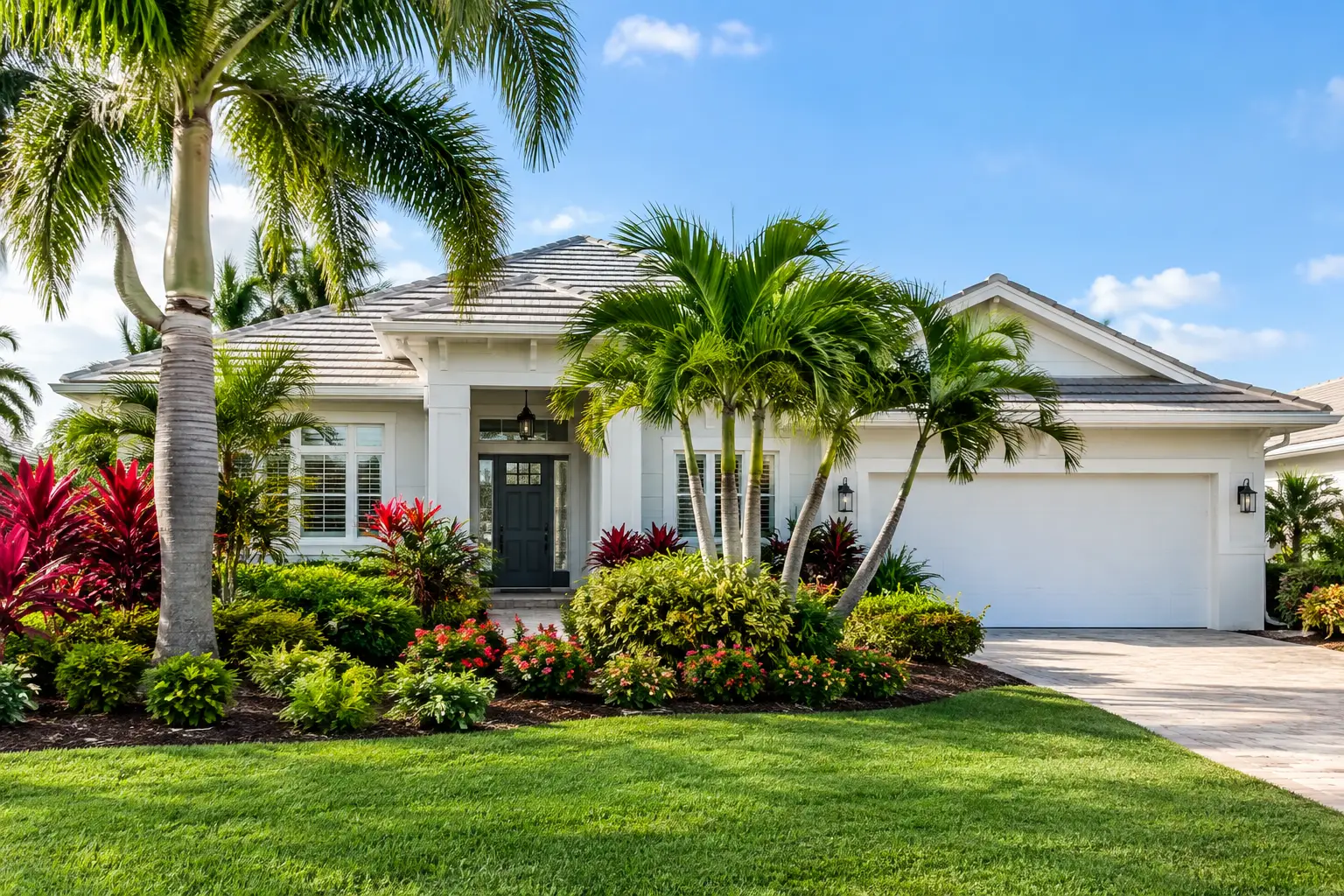
A Sarasota home can make its first impression long before a guest reaches the front door. The curve of the driveway, the condition of the lawn, the shade beneath a mature palm, and the path to the entry all signal how a property has been cared for. The best curb appeal improvement ideas do more than create a pretty view from the street. They establish a sense of arrival, support daily use, and reinforce the value of the home.
For South Florida homeowners, curb appeal is not a one-season project. Intense sun, summer rain, salt air near the coast, irrigation demands, and fast-growing plant material all influence what will look polished over time. A successful plan balances imagination with materials and plantings suited to Sarasota living.
Curb Appeal Improvement Ideas That Start With a Plan
It is tempting to address curb appeal one element at a time: replace a few plants this month, add lighting later, then revisit the driveway when it becomes unavoidable. That approach can work for simple maintenance, but larger improvements benefit from a coordinated design.
Start by viewing the property as a guest or prospective buyer would. Stand at the street and look at the house, front landscape, driveway, walkways, roofline, and entry as one composition. Identify what draws attention first and whether that feature is helping or hurting the overall impression.
A landscape plan can also clarify priorities. If the driveway is cracked, the front walk is too narrow, and foundation plants are obscuring the architecture, adding annual color will not solve the larger problem. Addressing the structure of the landscape first creates a better foundation for every finishing detail.
1. Create a Clear, Welcoming Entry Sequence
The route from curb to front door should feel intentional. A defined walkway, a visible entry, and a focal point near the door make a home more inviting and easier to navigate.
For some properties, this means widening an existing path or replacing a worn concrete walk with brick pavers or natural stone. For others, it may be as simple as reshaping planting beds so the walkway is no longer crowded by overgrown shrubs. The goal is not necessarily a grand entrance. It is a comfortable progression from street to door that feels proportionate to the home.
A pair of planters, carefully selected containers, or a distinctive specimen plant can provide a focal point without overwhelming a modest entry. Larger homes may benefit from layered planting, gates, columns, or a more formal walk that complements the architecture.
2. Refresh the Driveway and Parking Area
The driveway occupies a substantial portion of the front yard, especially in many Sarasota neighborhoods. When it is stained, uneven, narrow, or visually disconnected from the house, it can undermine an otherwise attractive landscape.
Brick pavers offer color, pattern, and a tailored appearance while allowing for a custom layout. They can be used for the full driveway or as borders and accents around a more restrained surface. Concrete can also be a strong choice when the finish, scale, and surrounding landscape are thoughtfully designed.
Drainage deserves attention here. Sarasota’s heavy rain can expose grading problems quickly, so a driveway upgrade should account for water flow rather than simply cover the existing issue with a new surface.
3. Use Layered Planting Instead of a Flat Hedge Line
A row of identical shrubs may be easy to install, but it often leaves a property looking generic and requires constant trimming. Layered planting gives the front yard depth while revealing the best features of the home.
A well-composed landscape commonly combines canopy trees or palms, mid-level shrubs, lower mounding plants, groundcovers, and seasonal color in selected areas. The mix should frame windows, soften corners, and guide the eye toward the entry without hiding the façade.
Plant selection should be based on sun exposure, soil conditions, irrigation coverage, and mature size. A plant that looks tidy in a nursery container can become a maintenance burden when installed too close to a walk, window, or driveway. Native and Florida-friendly choices can reduce water demands, but they still need appropriate placement and ongoing care.
4. Make Landscape Lighting Part of the Design
Landscape lighting gives a property a finished appearance after sunset, when many homeowners are arriving home or entertaining. It also improves visibility along walks, steps, and driveways.
The most effective lighting is selective. Soft path lights can define circulation, uplighting can reveal an exceptional tree or architectural detail, and gentle illumination at the entry can make the front door feel welcoming. Too many fixtures, or fixtures that are too bright, can create glare and flatten the landscape.
LED systems are efficient and flexible, but fixture placement, beam direction, and wiring should be planned with the landscape rather than added as an afterthought. Mature plant growth also matters. A light that beautifully highlights a palm today may be blocked by surrounding foliage in two years.
5. Give the Lawn Edges a Cleaner Finish
A healthy lawn remains an important part of Sarasota curb appeal, but sharp edges often make the larger visual difference. Defined bed lines, neatly edged pavement, and clean transitions between turf and planting areas make a property look cared for even when the landscape is intentionally relaxed.
This is where recurring maintenance protects the investment in design. Mowing, edging, pruning, irrigation checks, and seasonal adjustments keep a front yard from slowly losing its shape. A landscape that was installed with the right proportions can still look neglected when shrubs overtake windows or turf edges disappear into beds.
6. Add Color With Restraint
Color near the entry can make a home feel personal and lively, particularly during the cooler months when outdoor entertaining is at its peak. The key is to use color where it has the most impact instead of scattering it across every bed.
Flowering plants, containers, and accent foliage can highlight the front door, mailbox, or walkway. Coordinate those colors with the home’s exterior paint, shutters, roof tone, and hardscape materials. A tropical palette can be beautiful, but it should support the architecture rather than compete with it.
Seasonal color requires regular replacement and irrigation attention. Homeowners seeking a lower-maintenance approach may prefer evergreen structure with flowering shrubs and a limited number of statement containers.
7. Upgrade the Front Door and Its Surroundings
The front door is often the visual endpoint of the entire approach. A fresh finish, upgraded hardware, new house numbers, or improved surrounding trim can make a meaningful difference without requiring a complete renovation.
Consider how the door reads from the street. If it disappears beneath a deep porch or competes with busy landscaping, a stronger color, more distinctive lighting, or cleaner framing may help. If the house has a formal style, polished hardware and symmetrical planting can be appropriate. A more contemporary home may call for simplified materials and bolder geometry.
Practical needs should guide the choices. Covered entries protect finishes and guests during summer storms, while properly placed lighting improves usability after dark.
8. Repair or Reimagine Walkways, Walls, and Borders
Hardscape details communicate quality because they are permanent, tactile, and highly visible. Settled pavers, loose edging, cracked walls, and outdated borders draw attention for the wrong reasons.
Improving these elements can be transformative, especially where the grade changes from driveway to front door. Low retaining walls can organize planting areas and manage elevation changes. Seat walls may provide a welcoming architectural edge near a courtyard or garden. Paver borders can give a driveway a more finished relationship to the landscape.
Material selection should respect the home’s age and style. Highly ornate pavers may not suit a clean-lined contemporary residence, while stark gray concrete may feel out of place at a warm Mediterranean-inspired property. Cohesion is more valuable than following a passing trend.
9. Address Irrigation Before the Landscape Struggles
Brown turf, stressed shrubs, and uneven growth can make a property look neglected even when the landscape design is sound. In Sarasota, irrigation problems are frequently hidden until plants begin declining or water use rises unexpectedly.
Before making major planting investments, inspect sprinkler coverage, controller settings, drainage, and visible signs of leaks. New plantings may have different water needs than established turf, so an irrigation system should be adjusted as the landscape evolves.
This does not mean every area should receive more water. Overwatering can create its own problems, including shallow roots, disease pressure, and runoff. The right approach depends on the plant palette, the season, and the conditions on the property.
10. Maintain the Features That Define the First Impression
Curb appeal is not finished on installation day. Trees need thoughtful pruning, pavers need cleaning and occasional repair, mulch needs renewal, and planting beds need regular attention. Properties near the water may also require more frequent cleaning because of salt exposure and humidity.
A maintenance plan is particularly valuable after a significant renovation. It preserves the visual intent of the design and allows small issues to be corrected before they become expensive repairs. It also helps a home remain ready for everyday enjoyment, entertaining, or a future sale.
For homeowners considering a larger property transformation, coordinating landscape architecture, construction, outdoor features, and maintenance under one accountable team can prevent the disjointed results that come from treating each improvement separately. Berryman Design Group approaches curb appeal as part of the complete property experience, from the first concept through ongoing care.
The strongest front yards do not need to be the loudest on the street. They simply look right for the home, function beautifully in Florida conditions, and make every return home feel like an arrival.