

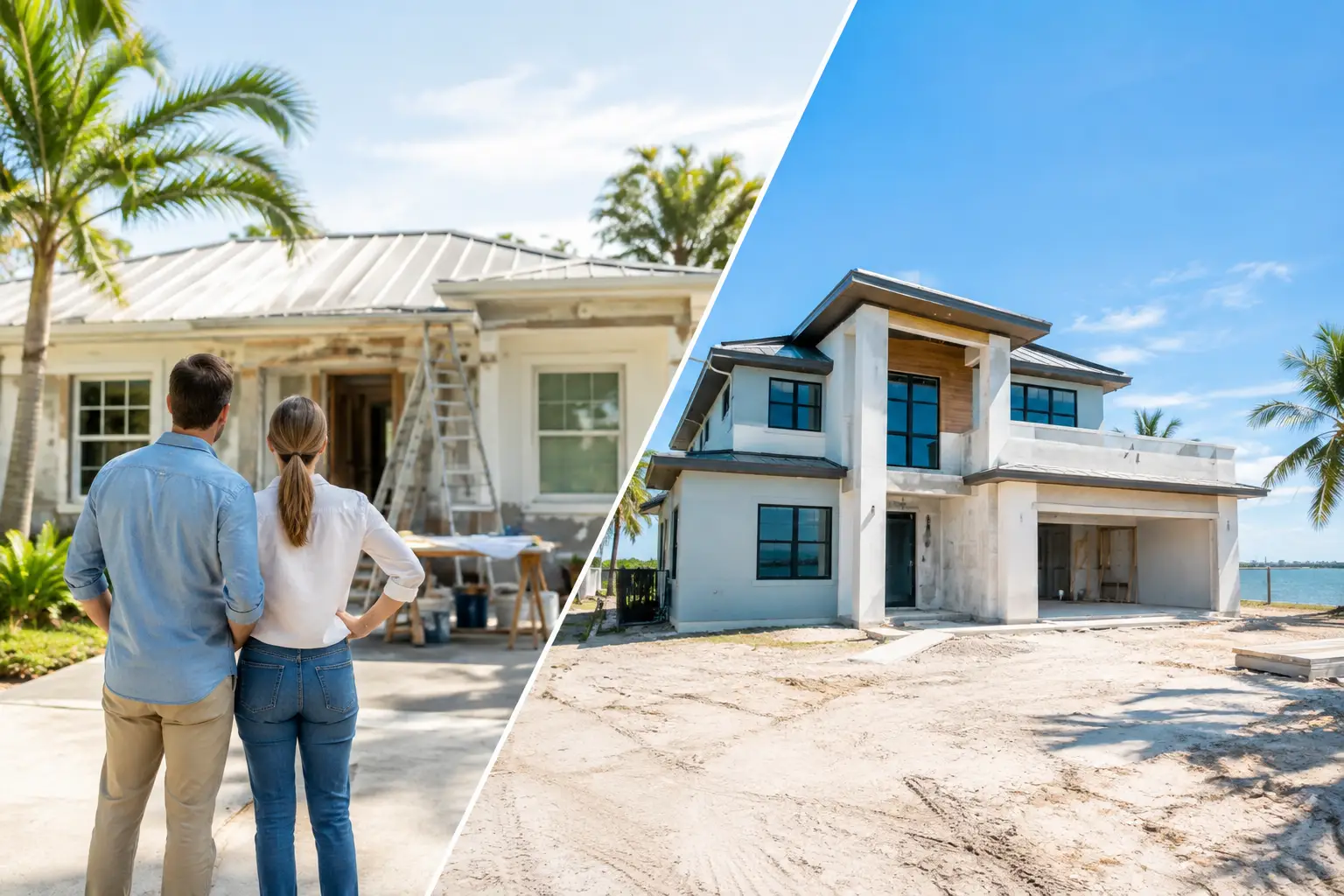
A Sarasota home can have a beautiful address, mature palms, and a desirable neighborhood – yet still fall short of the way its owners want to live. That is where renovation versus new construction becomes a meaningful decision, not simply a question of whether to update finishes or start over. The right answer depends on the condition of the property, the potential of the site, your long-term plans, and how much freedom you need to shape the home and outdoor environment.
For some homeowners, an extensive renovation preserves the character, location, and landscape they already value. For others, a custom new home is the more practical path to modern layouts, current building standards, and a property designed around their family from the first sketch. Both can create an exceptional result. The key is evaluating the entire property before becoming attached to one approach.
Renovation Versus New Construction: Start With the Site
The home is only one part of the decision. In Sarasota, the site can be as valuable as the structure sitting on it. A home close to the water, in an established neighborhood, or on a lot with mature canopy and carefully developed outdoor spaces may have qualities that are difficult to replace.
A renovation can make particular sense when the existing home has sound structural bones, a workable footprint, and architectural character worth retaining. An addition may create the extra bedroom, expanded kitchen, home office, or primary suite the household needs without giving up a favored location. Improvements to the pool area, paver drive, lighting, planting, outdoor kitchen, or covered living space can also change how the property feels every day.
New construction can be the better choice when the existing structure limits the project at every turn. A cramped floor plan, low ceilings, outdated systems, significant water intrusion, or a layout that cannot support the desired addition may make renovation increasingly inefficient. Starting fresh allows the home, pool, hardscape, landscape architecture, and outdoor living areas to work together rather than being designed around inherited constraints.
The lot itself should be reviewed early. Setbacks, easements, drainage, tree considerations, flood-related conditions, neighborhood requirements, and access for construction all influence what can be built and how the project should be planned. A promising property is not automatically a simple building site, and a detailed feasibility review prevents costly assumptions later.
When Renovation Delivers the Better Return
Renovation is often the right path when the goal is to improve a home rather than reinvent it. A well-planned whole-home renovation can open visual connections, improve circulation, bring kitchens and baths up to current expectations, and make indoor-outdoor living more natural. It can also retain portions of the property that would be expensive or impossible to replicate.
There is a financial advantage to keeping what is already working. Existing utility connections, a usable foundation, sound framing, established landscaping, and a functional pool may reduce the amount of new work required. That does not mean renovation is automatically less expensive. Once walls are opened, hidden conditions can affect scope and budget. Aging plumbing, electrical systems, structural repairs, termite damage, drainage deficiencies, and prior unpermitted work are common examples of issues that may need attention.
The best renovation budgets include room for discovery. Homeowners should be cautious when comparing an early renovation allowance to the price of a new home without accounting for design, engineering, permits, finishes, exterior improvements, and contingency. A realistic comparison includes the entire project, not just the visible construction work.
Renovation works best when the structure supports the vision
A renovation should not force a family to accept a compromised result merely because the existing walls are there. Before committing, consider whether the home can truly support the desired ceiling heights, room sizes, natural light, storage, and connection to the outdoors. If the answer is yes, renovation may offer a highly personal home with the benefit of an established setting.
It is also a strong choice for owners who want to preserve a recognizable architectural style. A thoughtful renovation can respect the proportions and personality of an older residence while introducing the comfort, performance, and functionality expected in a modern Sarasota home.
When New Construction Is the Clearer Choice
New construction offers the greatest degree of control. Rather than adjusting a plan around old walls, homeowners can establish priorities from the beginning: how guests arrive, where cars enter, how the kitchen functions during entertaining, which rooms open to the pool, and how private spaces are separated from gathering areas.
That freedom matters most when the desired home differs substantially from the existing one. A new build can be designed with integrated indoor-outdoor spaces, tailored storage, larger openings, contemporary mechanical systems, and a more intentional relationship to sunlight, views, privacy, and landscape. It also gives the owner an opportunity to coordinate every exterior feature, from the driveway and entry sequence to landscape lighting, irrigation, planting, and hardscape materials.
Current building practices and materials are another consideration. A newly built home can be planned around present-day code requirements, energy performance goals, and the structural expectations appropriate for the property. While a renovation can improve many of these areas, there are limits to what can be accomplished within an older structure.
New construction is not necessarily faster or simpler. The process requires careful site analysis, design development, permitting, selections, and coordination across many trades. Material lead times and approval timelines can affect schedules. Yet when a project requires major structural intervention anyway, new construction may provide a more predictable route to the finished home you actually want.
Compare the Full Cost, Not the Starting Price
Homeowners naturally ask which option costs less. The more useful question is which option creates the best value for the property, lifestyle, and investment horizon.
With renovation, the starting price may appear lower because part of the home already exists. The risk is that the scope grows as conditions are uncovered or as owners decide to address adjacent areas that no longer match the renovated spaces. With new construction, the initial investment is typically more comprehensive, but it can be easier to define the desired result before work begins.
Both paths require decisions beyond the interior. In Sarasota, exterior improvements can materially affect daily enjoyment and market appeal. A home renovation may call for updated drainage, a new driveway, refreshed planting, irrigation repairs, landscape lighting, pool improvements, or outdoor entertaining areas. A new home should similarly include a realistic allowance for the setting around it. A beautiful house on an unfinished site rarely feels complete.
Think about holding costs as well. If you plan to remain in the home during a phased renovation, the project may be less disruptive financially but more demanding personally. If the property must be vacant, temporary housing and extended carrying costs should be part of the decision. A clear schedule and a single accountable project team can make either approach easier to manage.
Design the Property as One Experience
The strongest residential projects do not treat architecture, construction, and landscaping as separate assignments. The front approach should support the architecture. The pool terrace should feel connected to interior gathering spaces. Planting should provide privacy and seasonal color without creating unnecessary maintenance demands. Drainage, irrigation, lighting, and hardscape details should be planned before the final finishes are in place.
This is especially valuable for homeowners considering a major renovation or custom build. Bringing landscape architecture into the conversation early can affect window placement, view corridors, patio size, shade structures, grading, and the location of outdoor kitchens or fireplaces. It also helps avoid the common mistake of leaving the landscape until the end, when budget and options are often limited.
Berryman Design Group approaches these decisions through an integrated Design, Build, Landscape, and Maintenance model, helping clients consider how the completed property will look, perform, and be cared for over time.
Make the Decision Around Your Next Ten Years
A renovation may be ideal if you love the neighborhood, can preserve a meaningful portion of the home, and need targeted changes that improve everyday living. New construction may be the wiser investment if the structure cannot support your vision, the site deserves a more intentional design, or you want complete control over the home and its outdoor environment.
Before choosing, look beyond the immediate project and picture the property ten years from now. Consider how you will entertain, how your needs may change, what level of maintenance you prefer, and how the improvements will position the home within its Sarasota market. The best choice is the one that gives the property a coherent future – not simply a newer appearance.