

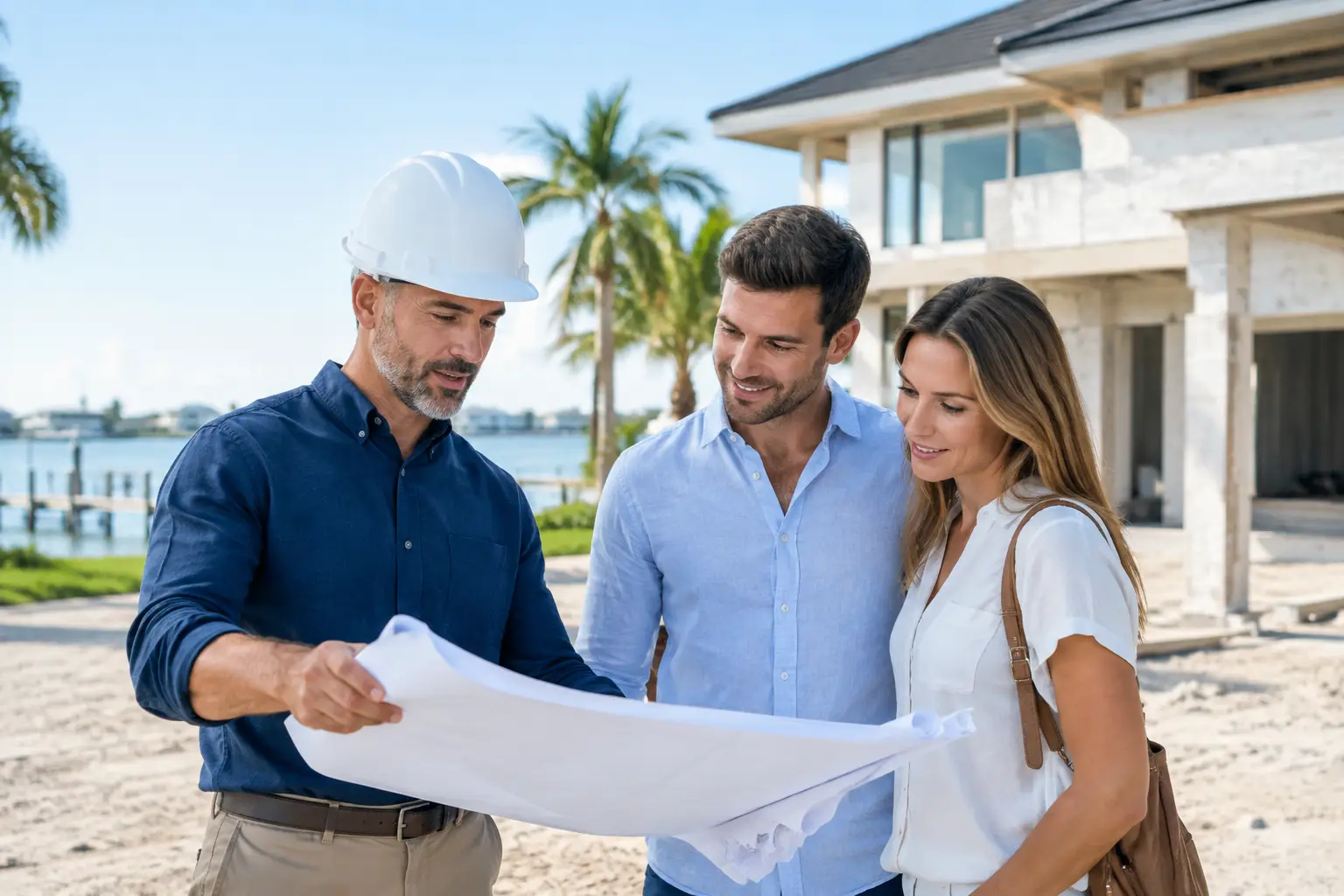
A search for “custom home builder Sarasota Florida” often begins with a vision: a waterfront home designed for entertaining, a modern residence that opens to the pool, or a lasting home tailored to the way your family actually lives. The harder part is finding the right team to carry that vision through the many decisions between an empty lot or aging property and a finished home.
A custom home is not simply a collection of upgraded finishes. It is a coordinated property plan. Architecture, site conditions, outdoor living, drainage, construction details, maintenance needs, and resale considerations all influence one another in Sarasota’s distinctive climate and housing market. Choosing a builder with the right process can protect both the experience of building and the long-term value of the property.
What a Custom Home Builder in Sarasota, Florida Should Understand
Sarasota homes are shaped by conditions that deserve attention well before construction begins. Intense sun, summer rain, humidity, coastal exposure, drainage requirements, and local neighborhood character all affect how a home should be sited, constructed, landscaped, and maintained.
For example, a beautiful rear elevation has limited value if the outdoor spaces are too exposed for comfortable use in the afternoon. A pool, patio, outdoor kitchen, and planting plan need to work with the home’s architecture while directing water away from the residence. Material choices must suit the environment as well as the design. These are not decisions to postpone until the last phase of the project.
The best custom builders approach the home and its grounds as one property. They ask practical questions early: How will you arrive at the home? Where will guests park? Which rooms should capture a view? How do you want to use the outdoor spaces in July as well as January? What degree of upkeep fits your lifestyle? Clear answers lead to a more considered design and fewer expensive adjustments later.
Start With the Way You Want to Live
Before comparing builders, define the daily experiences your new home needs to support. A family that hosts frequently may prioritize a connected kitchen, covered lanai, outdoor kitchen, generous storage, and a pool area with room to gather. A seasonal homeowner may prefer durable finishes, smart irrigation, low-maintenance planting, and systems that can be monitored while they are away.
This is also the time to distinguish between preferences and requirements. Natural light may be a priority, but it should be balanced with privacy, energy performance, and window placement. An expansive outdoor living area may be essential, but it needs shade, circulation, drainage, and easy access from the rooms where people will gather.
A capable builder will use these conversations to shape the project rather than simply price a list of rooms. They should be able to explain where a choice adds lasting value, where it creates additional complexity, and where a different approach may serve the home better.
Look for an Integrated Design and Build Process
Custom construction involves many moving parts: plans, permitting, engineering, selections, site preparation, construction schedules, inspections, and final details. When the design intent is handed from one separate company to another without close coordination, homeowners can end up managing the gaps.
An integrated team brings design, construction, and landscape planning into the same conversation from the beginning. That can be especially valuable for properties with significant outdoor improvements, including pools, fountains, retaining walls, paver driveways, fireplaces, walkways, and outdoor kitchens. Rather than treating these features as unrelated additions, the team can coordinate elevations, utilities, materials, planting, lighting, and access before work is underway.
There is a trade-off worth understanding. Some homeowners prefer to assemble their own architect, builder, landscape architect, and specialty contractors. That route can work well when the owner has substantial time, a clear process, and confidence coordinating multiple firms. For many homeowners, however, one accountable partner reduces handoffs and keeps the property moving in a consistent direction.
At Berryman Design Group, the Design, Build, Landscape, and Maintenance approach is intended for precisely that level of coordination. Homeowners can work with an experienced team from initial ideas through construction, outdoor completion, and ongoing property care.
Ask How the Builder Manages the Details
Good design earns attention, but consistent execution determines how the project feels from month to month. During builder conversations, ask how communication is handled, who will be your primary point of contact, how changes are documented, and how budget decisions are reviewed.
You should also ask when the builder brings in key expertise. Waiting until construction has started to consider irrigation zones, landscape lighting, hardscape transitions, or drainage can limit options. Early coordination allows the builder to plan sleeves, electrical service, water lines, grading, and structural requirements before finished surfaces make revisions more disruptive.
A thoughtful builder should be direct about decisions that affect price and schedule. Custom work naturally involves variables, particularly on renovation sites or lots with existing conditions that cannot be fully evaluated until work begins. The goal is not a promise that nothing will change. The goal is a clear process for identifying issues, presenting options, and making informed choices without surprises being left to the end.
Consider the Property Beyond Move-In Day
A custom home should look finished when you move in, but it should also be designed to mature well. Landscaping softens architecture, creates privacy, frames views, and makes outdoor spaces more inviting. It also requires a practical plan for irrigation, seasonal growth, drainage, lighting, and ongoing maintenance.
This is where a builder with landscape architecture expertise can offer a meaningful advantage. Plant material should be selected for the site’s sun exposure, soil conditions, and maintenance expectations, not just for a strong first impression. Pavers, driveways, retaining walls, and walkways need to complement the home while performing reliably through changing weather.
Consider how the home will be cared for after construction. A property with sophisticated outdoor features benefits from a team that understands what was installed and why. Regular landscape and lawn maintenance, irrigation-related upkeep, and seasonal attention can help preserve the investment and keep the home looking as intentional as it did on completion day.
Evaluate Local Knowledge and Long-Term Value
A Sarasota builder should understand more than building methods. Local knowledge includes neighborhood expectations, lot characteristics, common permitting considerations, and the features buyers value when it is time to sell. This does not mean every home should follow the same formula. It means the home should be personal without becoming disconnected from its setting or market.
Resale should inform decisions, not eliminate individuality. A highly customized hobby room, an unconventional layout, or an elaborate outdoor feature may be exactly right for one owner. The builder’s role is to help you understand the investment, maintenance, and market implications so the decision is deliberate.
For homeowners buying a property with plans to renovate or rebuild, real estate guidance can be equally useful. The right property is not always the one with the most polished current finishes. A home with strong location, lot potential, and a clear path for improvement may offer a better opportunity to create a tailored residence.
Choose a Team You Can Talk to Openly
The custom-home relationship is a long one. You will discuss budget, preferences, frustrations, and decisions that may not have a perfect answer. Credentials and portfolios matter, but so does the comfort of working with the people responsible for your home.
Pay attention to how a prospective builder listens. Are they interested in your priorities, or are they quick to push a familiar solution? Can they explain technical issues in clear language? Do they talk realistically about trade-offs? The right team brings confidence without making the process feel impersonal.
A well-built Sarasota home should feel connected to its site from the moment you pull into the driveway, walk through the front door, and step into the outdoor spaces beyond it. Begin with a team that sees the entire property, asks the right questions early, and has the experience to turn your ideas into a home that continues to serve you well.