

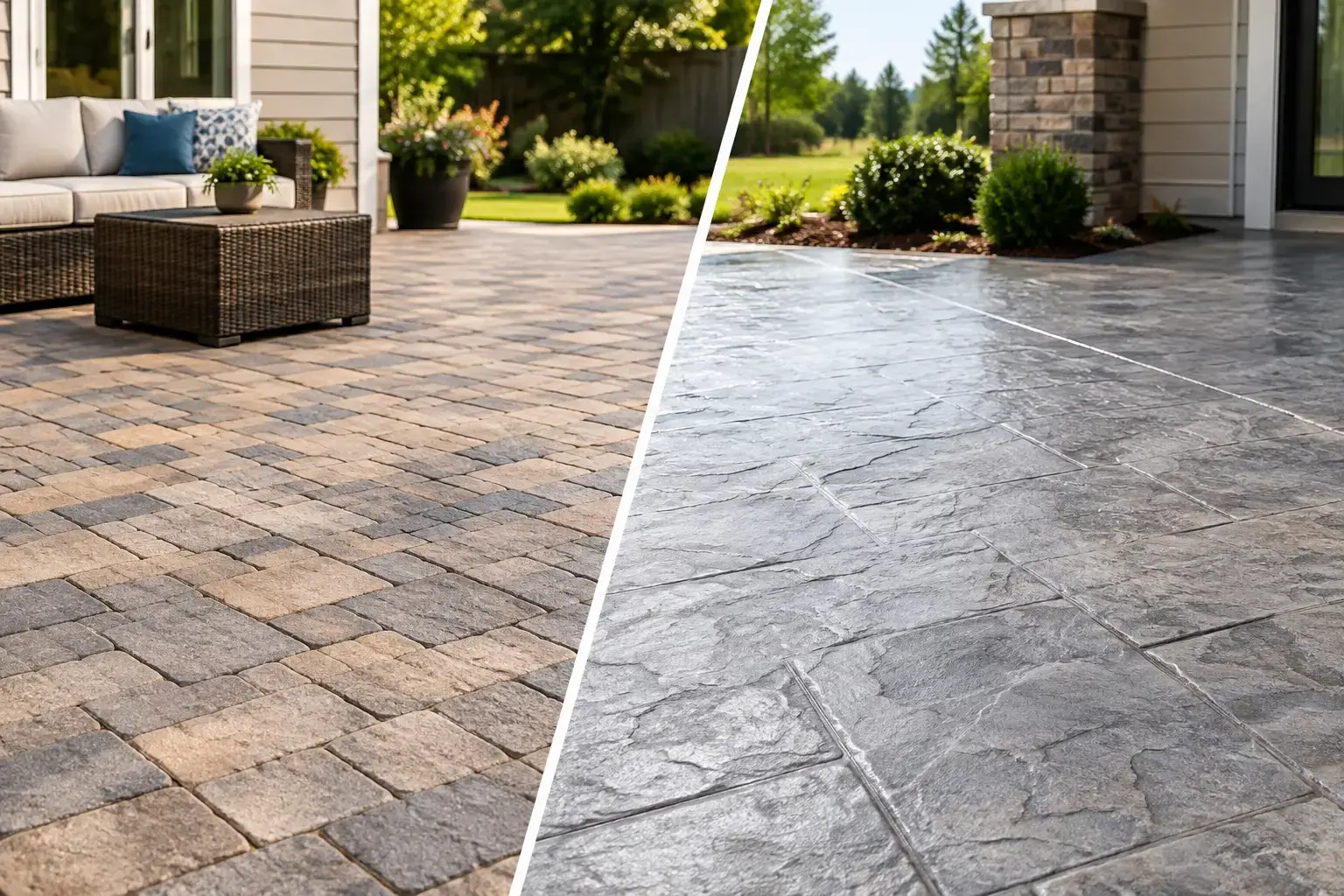
A Sarasota patio has to do more than look good on the day it is poured or installed. It has to hold up to summer downpours, intense sun, pool traffic, sandy feet, outdoor entertaining, and the occasional shift in soil or drainage. When homeowners weigh paver patios versus stamped concrete, the best choice usually comes down to how they want the space to perform over the next decade, not simply which surface has the lower initial price.
Both materials can create a polished outdoor living area. Both work beautifully around pools, outdoor kitchens, fire features, and garden transitions. Yet they age differently, require different maintenance, and offer distinct advantages when a property needs repairs or future additions.
Paver Patios Versus Stamped Concrete: The Essential Difference
A paver patio is assembled from individual concrete, clay, or natural-stone units set over a carefully prepared base. The joints between units allow the surface to flex slightly and can help manage water movement when the patio is designed with proper grading and drainage.
Stamped concrete is a continuous concrete slab patterned to resemble materials such as stone, brick, tile, or wood. Color is often added through integral pigment, hardener, stain, or a combination of finishes. Its appeal is immediate: it can create the appearance of a custom stone surface with fewer joints and a more uniform field of color.
That distinction matters in Florida. A continuous slab and a modular paver system respond differently to settlement, water, roots, and later changes to the property. Neither is automatically the right answer. The right answer should follow the home’s architecture, site conditions, intended use, and long-term plans.
Appearance and Architectural Flexibility
Stamped concrete offers a clean, expansive look. It can be particularly effective for a contemporary pool deck, a broad entertaining area, or a home where a quieter, more monolithic surface suits the architecture. Patterns can range from irregular flagstone impressions to formal ashlar stone and plank-style textures.
The limitation is that stamped concrete is still one continuous finished surface. Even high-quality installations can reveal repetitive patterning if the selected stamp is too uniform or the patio is very large. Color can also change gradually as sealers weather in the Florida sun.
Pavers bring more texture, dimension, and design flexibility. A landscape architect can use laying patterns, borders, contrasting bands, inlays, and changes in paver scale to define a dining terrace, pool perimeter, walkway, or fire-pit seating area. They complement Mediterranean, coastal, transitional, and traditional Sarasota homes especially well, though large-format pavers can also feel distinctly modern.
For homeowners considering future work, pavers offer another advantage: a patio can often be extended, reshaped, or tied into a new walkway, driveway, outdoor kitchen, or pool renovation without making the original installation look like an afterthought. Matching discontinued pavers may still require planning, but modular materials generally make phased improvements easier.
Cost Depends on More Than the Surface
Stamped concrete frequently has a lower upfront cost than a premium paver installation, particularly for a simple rectangular patio with limited site preparation. It can be an attractive option when a homeowner wants a decorative finish over a relatively straightforward slab area.
However, the installed price of either material depends heavily on what lies below it. Demolition, excavation, base preparation, grading, drainage improvements, access constraints, edge restraints, curves, steps, and site protection can substantially affect a project budget. A patio built beside an existing pool, mature landscaping, or a home with challenging drainage is rarely a simple square-foot calculation.
Pavers often cost more initially because they involve individual units, base material, compaction, edge detailing, and joint sand. That investment may be easier to justify when the patio is a central feature of a larger outdoor living plan or when the property will benefit from future adaptability.
It is also wise to consider lifecycle costs rather than only the day-one proposal. A lower initial cost can lose its advantage if a damaged slab later requires a highly visible repair. Conversely, pavers require periodic attention to joints, cleaning, and occasional leveling in areas that receive heavy use or water exposure.
Florida Heat, Rain, and Drainage
Sarasota’s climate puts every hardscape surface to work. Summer heat can make darker finishes uncomfortable under bare feet, while heavy rains expose weak grading and drainage details quickly.
Stamped concrete should be installed with intentional slope so water moves away from the home and does not collect near doors, screen enclosures, or pool coping. Control joints are necessary to guide cracking, but they do not eliminate the possibility of cracks. Proper subgrade preparation and reinforcement help, yet concrete naturally moves as it cures and as conditions change beneath it.
Pavers also need deliberate grading, but the jointed system can be more forgiving when minor movement occurs. Water can pass through conventional paver joints into the base below, although that does not mean every paver patio is automatically a drainage solution. In many cases, the base, slope, adjacent soils, and collection points matter more than the paver itself. Where runoff management is a priority, permeable paver systems may be worth considering as part of a site-specific drainage plan.
For either material, lighter colors generally stay more comfortable in direct sunlight. Texture also matters around pools. A finish should provide dependable traction without being so aggressive that it is unpleasant for bare feet or difficult to keep clean.
Repairs Are Where the Materials Separate
The most practical difference between pavers and stamped concrete often appears years after installation.
When a paver patio develops a low spot, an experienced crew can usually remove the affected pavers, correct the base, and reinstall the same units. If irrigation work, electrical lines, plumbing, or drainage repairs require access beneath the patio, pavers can be lifted and reset. The repair is often difficult to detect when the original materials are retained and the work is performed carefully.
Stamped concrete is more complicated to repair invisibly. Small cracks can sometimes be filled or blended, and resurfacing systems can improve a worn appearance. Still, matching the original color, texture, sheen, and weathering across a repaired area is difficult. A crack may be structurally minor but visually noticeable, especially on a decorative stamped finish.
That does not mean stamped concrete is fragile or unsuitable. Many stamped patios perform well for years. It simply means homeowners should be comfortable with the reality that concrete cracks can occur, and decorative repairs rarely disappear completely.
Maintenance Expectations
Both choices benefit from routine cleaning, especially beneath trees or near pools where organic debris, sunscreen, and mildew can collect. Promptly removing leaves and rinsing away surface buildup helps preserve color and reduces staining.
Stamped concrete typically needs resealing on a recurring schedule based on sun exposure, use, and the type of sealer applied. Resealing helps protect color and makes cleaning easier, but it must be done correctly. Too much sealer or an unsuitable product can create a cloudy appearance or a slippery finish when wet.
Pavers may also be sealed, though sealing is optional depending on the desired look and material. Joint sand can need replenishment over time, and polymeric sand may help stabilize joints when properly installed. Occasional weeds or ant activity can appear in joints, particularly if maintenance is deferred. These are manageable issues, but they should be anticipated rather than treated as a surprise.
Which Patio Material Fits Your Property?
Choose stamped concrete when you want a broad, cohesive decorative surface, have a relatively stable and well-drained site, and prefer a lower initial investment. It can be an excellent choice for a defined patio footprint where future excavation or expansion is unlikely.
Choose pavers when architectural detail, repairability, and flexibility matter most. They are especially compelling around pools, outdoor kitchens, walkways, and multi-phase landscape renovations where the hardscape needs to connect several spaces with a tailored appearance.
The decision should also reflect the home itself. A patio should not feel like a separate project dropped into the yard. Its color, scale, edges, planting, lighting, drainage, and relationship to the home should work together. That is where a coordinated design and construction process can prevent expensive revisions later.
At Berryman Design Group, patio material selection is considered alongside the entire outdoor environment, from grading and drainage to planting, pool features, lighting, and future maintenance. The most satisfying result is not simply a surface that photographs well. It is an outdoor room that feels natural to the property, performs through Florida weather, and gives your family a place to use often.