

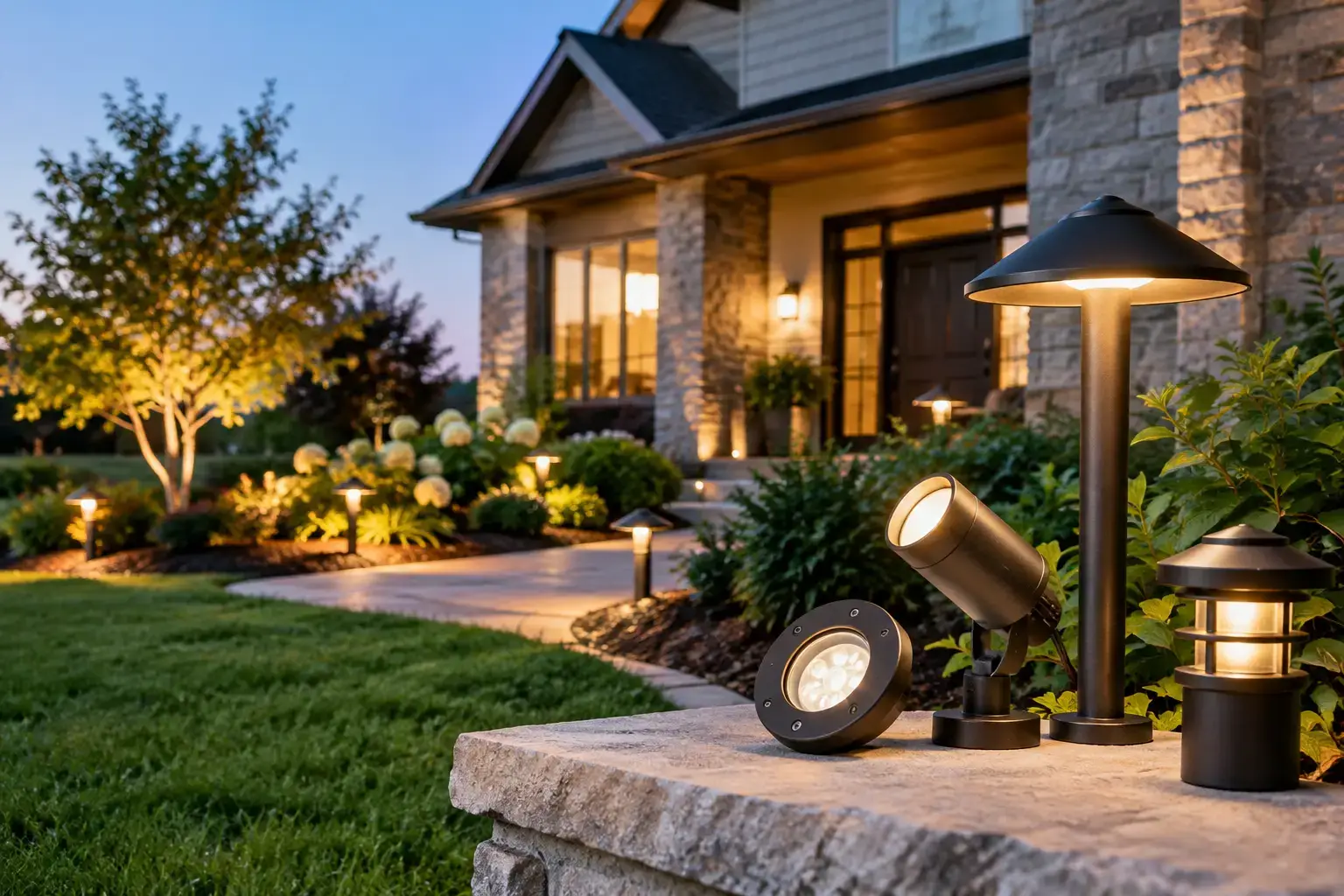
A well-lit property does more than make a home visible after sunset. It extends the use of patios and pool areas, makes arrivals safer, highlights the architecture and landscape you have invested in, and creates a more polished impression from the street. Choosing landscape lighting fixtures is where that result begins. The right fixture is not simply the brightest or most decorative option. It has to suit the purpose, the setting, the material palette, and Sarasota’s demanding heat, rain, humidity, and coastal air.
For a custom home or a major outdoor renovation, lighting deserves to be considered early in the design process. When fixture selection is coordinated with planting, hardscape, irrigation, and outdoor living areas, the finished property feels intentional rather than added on.
Start With What the Lighting Needs to Do
Every fixture should have a job. Some lights guide people safely along a walk. Others define the edge of a drive, illuminate a set of steps, reveal the texture of a mature palm, or create a welcoming glow at the entry. A fixture can do more than one thing, but trying to make one type of light serve every purpose usually leads to glare, dark gaps, or an overly busy appearance.
Begin with how your family and guests use the property after dark. A front walk and driveway need clear, comfortable visibility. A pool deck needs light that supports movement without reflecting harshly off the water. An outdoor kitchen requires useful task lighting, while a garden seating area may call for a softer, more relaxed effect. Security is also a consideration, but effective security lighting does not need to turn the yard into a floodlit parking lot.
A landscape architect can create layers of light so the property remains functional while retaining depth and atmosphere. The goal is to see the destination and the path to it, not necessarily the fixture itself.
Choosing Landscape Lighting Fixtures by Location
Fixture type should follow the landscape feature and viewing angle. This is often more important than selecting a finish from a catalog.
Paths, Steps, and Driveways
Path lights are familiar for good reason, but they are not always the best answer. Along a narrow walk, too many path lights can create a runway effect and put bright points directly in a guest’s line of sight. Downlights mounted in trees, on structures, or beneath eaves can provide a more natural wash of light while keeping the source discreet.
For steps and grade changes, integrated step lights or low, shielded fixtures are typically more dependable than relying on nearby path lights. The key is consistent illumination at the tread, where people need it most. At driveways, carefully placed bollards, low path fixtures, or downlighting can define the route without interfering with vehicles or competing with the home’s façade.
Planting Beds, Specimen Trees, and Palms
Uplights bring form and drama to the landscape. They can emphasize the trunk and canopy of a live oak, the clean vertical rhythm of palms, or the texture of an architectural hedge. However, more uplighting is not automatically better. A tree that is lit too evenly can look flat, while an exposed fixture can cause uncomfortable glare from a patio or interior room.
Adjustable bullet lights and well lights are common choices, but their use depends on the planting and future maintenance needs. A well light sits flush with the grade and can be effective near turf or walkways, though it must be installed and maintained so mulch, leaves, and irrigation runoff do not block the beam. A surface-mounted bullet light is easier to adjust as plant material matures, but it should be carefully concealed within the bed.
Architecture, Walls, and Outdoor Living Areas
Wall washing and grazing create very different effects. Wall washing casts a broad, even field of light across a surface and is useful for highlighting a façade, garden wall, or large planting backdrop. Grazing places light close to the surface, bringing out the texture of stone, stucco, brick, or decorative masonry. The effect can be striking, but it also reveals imperfections, so placement requires a thoughtful eye.
For pergolas, covered lanais, and outdoor kitchens, consider fixtures that support the activity taking place. Recessed ceiling lights, discreet downlights, and under-counter lighting can make an entertaining area practical without overwhelming it. Decorative sconces or pendants may fit the architecture, but they should be selected for wet-location use when exposed to the elements.
Select Materials Built for Sarasota Conditions
Florida’s climate is not forgiving to low-quality exterior fixtures. Heat, high humidity, heavy rain, irrigation spray, and salt in coastal areas all affect finishes, lenses, sockets, and internal components. A fixture that looks good on installation day may corrode, discolor, or fail prematurely if it was not built for the environment.
Solid brass and copper are strong choices for many premium landscape installations. They develop a natural patina over time, which can complement a traditional, coastal, or garden-forward property. Marine-grade stainless steel can also perform well, especially when the specific alloy and finish are suited to coastal exposure. Powder-coated aluminum may be appropriate in protected locations or for certain budgets, but quality varies widely and it generally requires closer scrutiny near salt air.
Avoid choosing solely by the initial price tag. Less expensive fixtures can make sense for a short-term refresh, but replacing failed lights, repairing corroded connections, and correcting poorly planned coverage can cost more than selecting durable components from the beginning. The fixture, wire, connections, transformer, and installation details all influence longevity.
Pay Attention to Light Color, Output, and Glare
The color temperature of an LED changes how a property feels. Warm white light, generally in the 2700K to 3000K range, works well with most residential landscapes and architecture. It enhances natural stone, warm-colored roofs, wood details, and foliage without making the grounds look stark or blue. Cooler light may have a place in certain contemporary designs, but it should be used deliberately.
Brightness should be measured according to purpose, not assumed from wattage. LEDs use far less energy than older halogen lamps, so a low-wattage fixture can still produce substantial usable light. Excess output is a common mistake. It creates glare, reduces the sense of comfort outdoors, and can diminish the visual impact of the home and landscape.
Shielding and aiming matter as much as output. A properly aimed fixture places light on a tree canopy, walkway, or wall rather than into a neighboring property, a driver’s eyes, or a bedroom window. During design and installation, the lighting should be viewed from the street, the entry, key gathering areas, and inside the home. Those perspectives often reveal adjustments that are not obvious during daylight installation.
Plan for Maintenance Before Installation
Even excellent landscape lighting needs periodic attention. Plants grow over fixtures, mulch shifts, lenses collect debris, and adjustments may be needed after a renovation or seasonal changes in the landscape. Fixtures placed where a maintenance team can access them without damaging plants or hardscape will remain more reliable and easier to keep attractive.
This is also why lighting should be coordinated with irrigation. Spray directed at fixtures accelerates wear and leaves mineral deposits on lenses. Locating fixtures away from direct sprinkler patterns, using quality sealed connections, and maintaining proper drainage around in-ground fixtures protects the investment.
Controls deserve the same consideration. Timers and photocells are simple, effective options for many homes. Smart controls can offer scheduling, zoning, and adjustment from a phone, which is useful for seasonal entertaining or part-time residents. The best system is the one that the homeowner can use confidently and that remains easy to service over time.
Let the Property Lead the Design
The most successful lighting plans are not built from a collection of fixtures. They are built around the experience of coming home, walking through the garden, gathering by the pool, and seeing the property from the street. A contemporary waterfront home may call for restrained lines and precise architectural lighting. A lush, established Sarasota garden may benefit from softer layers that reveal texture and movement without over-lighting every bed.
At Berryman Design Group, landscape lighting can be considered alongside the full property – from planting and pavers to pools, outdoor kitchens, and ongoing maintenance. That integrated approach helps ensure each fixture supports the larger design rather than becoming an isolated afterthought.
A carefully selected lighting system should make your home feel more inviting after dark while allowing the landscape, architecture, and Florida evening sky to remain the focus.