

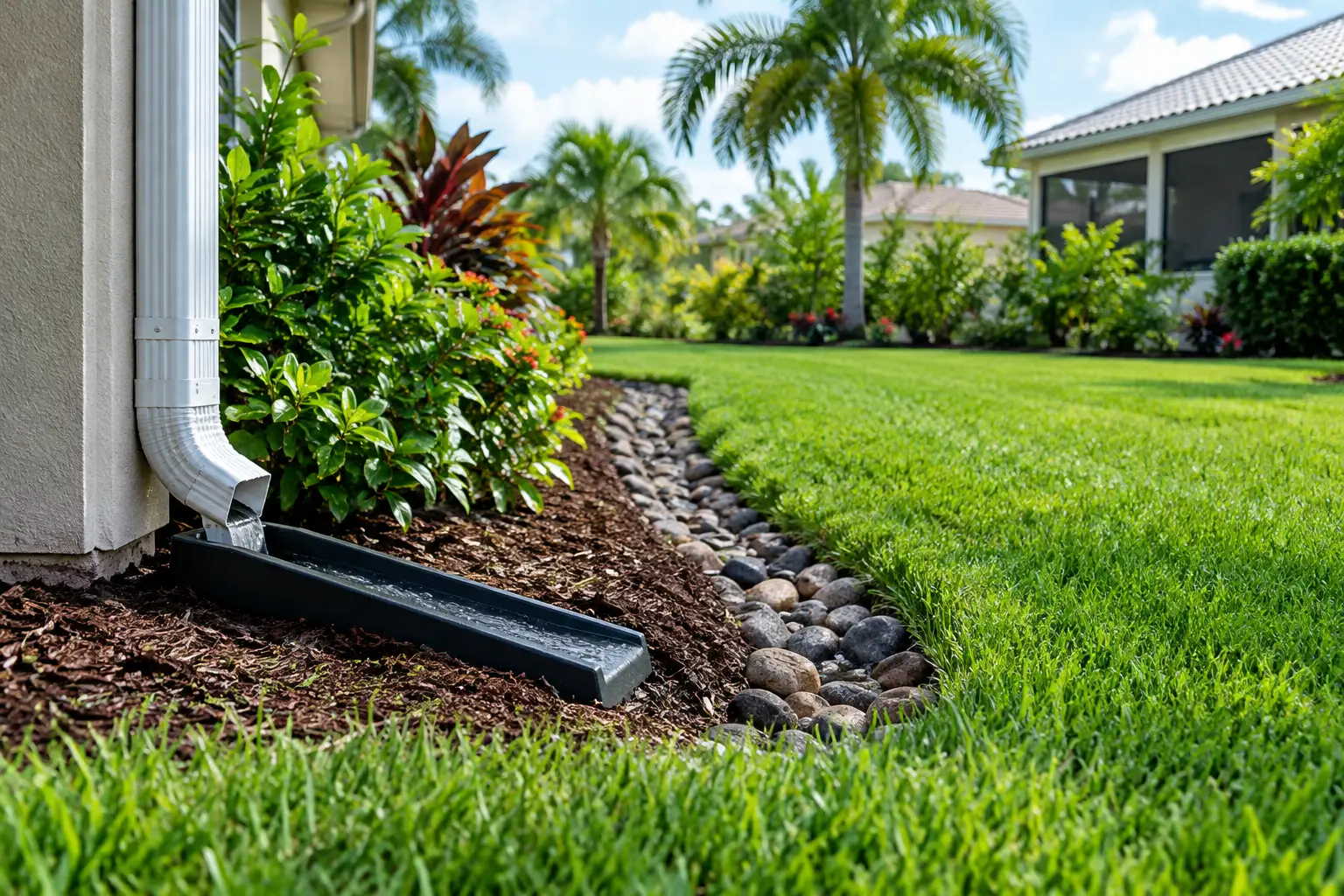
A Sarasota rainstorm can deliver several inches of water before dinner. If that water collects beside the home, floods a planting bed, or turns the lawn into a muddy path, the problem is not simply inconvenient. It can affect turf health, hardscape stability, foundation areas, and the way you enjoy your property. This Florida landscape drainage guide explains how to identify the cause of excess water and choose a solution that fits your home, site, and landscape plans.
Florida properties need a different approach than landscapes in colder or drier climates. Flat topography, high water tables, sandy soils, intense seasonal rainfall, and compacted areas around new construction all influence where water goes. Effective drainage is rarely about installing one drain in the lowest spot. It begins with understanding the entire property.
Start With Where the Water Comes From
Before selecting a drain, look at the landscape during and after a heavy rain. Notice where water enters the property, where it moves, and where it remains after surrounding areas have dried. Roof runoff, neighboring lots, downspouts, driveway slopes, patio elevations, irrigation leaks, and naturally low grades can all contribute to the same wet area.
A drainage issue is often most visible in the lawn, but its source may be elsewhere. For example, a downspout that discharges near a foundation bed can saturate soil, then send water across a walkway and into a turf area. A new paver patio may be beautifully built yet create runoff if its finished elevation and surrounding grades were not planned together.
Watch for four common signs: persistent standing water more than a day after rainfall, thinning or yellowing turf in isolated areas, mulch washing from beds, and soil erosion near walkways, driveways, or pool decks. Water stains on walls, settling pavers, and mosquito activity can also point to a drainage concern.
Florida Landscape Drainage Guide: Design Around the Grade
Grade is the starting point for nearly every successful landscape drainage plan. Water follows gravity, even on a lot that appears level. The goal is to create subtle, intentional slopes that move surface water away from the house and toward an appropriate collection or discharge area.
For most homes, the finished ground near the foundation should slope away from the structure. The exact solution depends on the house elevation, lot size, existing drainage features, municipal requirements, and neighboring properties. Moving water off one property only to create a problem next door is not a sound design strategy.
On Sarasota-area properties, drainage planning also has to respect the limits of the site. During the wet season, water may have nowhere to go quickly if the groundwater level is already high. In those cases, a system needs to slow, direct, collect, or distribute water thoughtfully rather than relying on deep underground drainage alone.
A registered landscape architect can evaluate grade alongside the complete outdoor plan: pool, terrace, planting beds, driveway, outdoor kitchen, lighting, walls, and circulation routes. This coordinated approach matters because drainage is expensive to correct after hardscape and planting are complete.
Swales: Simple Grading With a Purpose
A swale is a broad, shallow channel that directs surface water across the landscape. When properly shaped and planted, it can blend into a lawn or garden rather than looking like a ditch. Swales are often a practical choice for properties with room to guide runoff toward a suitable drainage area.
The trade-off is that swales need enough slope and a clear destination. They may not be suitable for a compact courtyard, a narrow side yard, or a property where every inch is committed to paving and outdoor living. They also require maintenance. Debris, excessive mulch, and changing grades from added soil can interrupt their function over time.
Catch Basins and Area Drains
Catch basins and area drains collect water at concentrated low points, such as the bottom of a driveway, beside a patio, or near a pool deck. From there, underground piping carries water to an approved outlet or drainage area.
These systems can be highly effective, but placement is critical. A basin installed in the wrong location may collect little water while the actual low spot remains saturated. Grates also need periodic clearing, particularly after storms when leaves, palm debris, and mulch can block flow. A drain is not maintenance-free, but it is far easier to maintain when it is included in a regular property-care plan.
French Drains and Underground Piping
French drains are commonly requested for wet lawns and soggy planting beds. They generally use a perforated pipe surrounded by stone to collect water from the surrounding soil. They can help where water is moving through the soil profile, but they are not automatically the answer for every puddle.
In Florida’s sandy soils and high-water-table conditions, a French drain may have limited capacity during extended rainfall. It must also have a viable outlet or a carefully designed discharge approach. Installing pipe without correcting surface grade can leave the original problem untouched.
Solid underground piping is often better for moving roof runoff or water collected by basins. It directs a known volume of water from one location to another. The design must account for pipe slope, cleanouts, outlet conditions, and the possibility of future landscaping or construction changes.
Use Planting to Support, Not Block, Drainage
Plants cannot replace proper grading, but the right plant palette can support a healthier, more resilient drainage plan. Moisture-tolerant plants may be appropriate in areas that remain periodically damp, while plants that demand dry roots should be kept out of low spots. Repeatedly replacing struggling shrubs is usually more costly than designing for the site’s actual conditions.
Mulch should be applied with restraint near swales, drains, and foundation edges. Thick mulch can migrate during heavy rain and clog drainage grates. It can also trap moisture against plant crowns or create a dam that redirects shallow surface flow.
Turf selection and maintenance matter as well. Compacted soil, excessive thatch, and worn paths can reduce infiltration and lead to runoff. Aeration, adjusted irrigation schedules, and designated walkways may improve conditions in locations where foot traffic has hardened the ground.
Do Not Overlook Irrigation and Roof Runoff
Not every wet area is stormwater-related. A broken irrigation head, a zone that runs too long, or a valve that does not fully shut off can keep soil saturated between rain events. Inspect the irrigation system before investing in major drainage work, especially if the issue appears during dry weather.
Roof runoff deserves equal attention. A large roof can concentrate an enormous amount of water at a few downspouts. Directing that water away from the home and into a planned drainage route protects planting beds, reduces erosion, and keeps walkways more comfortable during storms.
This is also where landscape, construction, and maintenance decisions intersect. If a home renovation adds roof area, a new patio changes surface runoff, or a pool project alters elevations, the drainage plan should be reviewed as part of the project rather than treated as an afterthought.
Know When Drainage Requires Professional Design
A homeowner can clear a blocked grate, extend a downspout outlet, or adjust irrigation timing. More substantial issues call for a site-specific plan. Seek professional guidance when water reaches the foundation, repeatedly enters a garage or lanai, affects a pool deck, causes pavers to settle, crosses property lines, or returns despite previous repairs.
Permitting, utility locations, easements, stormwater rules, and existing drainage infrastructure can all affect what is feasible. A thoughtful assessment may reveal that a modest regrading project and a few collection points will solve the problem. On another property, the right answer may involve redesigning the driveway, rebuilding a patio edge, or coordinating drainage with a broader landscape renovation.
The Berryman Design Group approaches drainage as part of the complete property experience, not as an isolated underground fix. By connecting landscape architecture, outdoor construction, and ongoing maintenance, the team can help ensure practical drainage supports the finished look and long-term performance of the home.
A dry, usable yard is not an accident in Florida. It is the result of thoughtful grading, appropriate materials, well-placed drainage, and routine attention after the work is complete. Address the water pattern before the next major improvement, and every patio, planting bed, and outdoor gathering space has a better foundation to perform beautifully.