

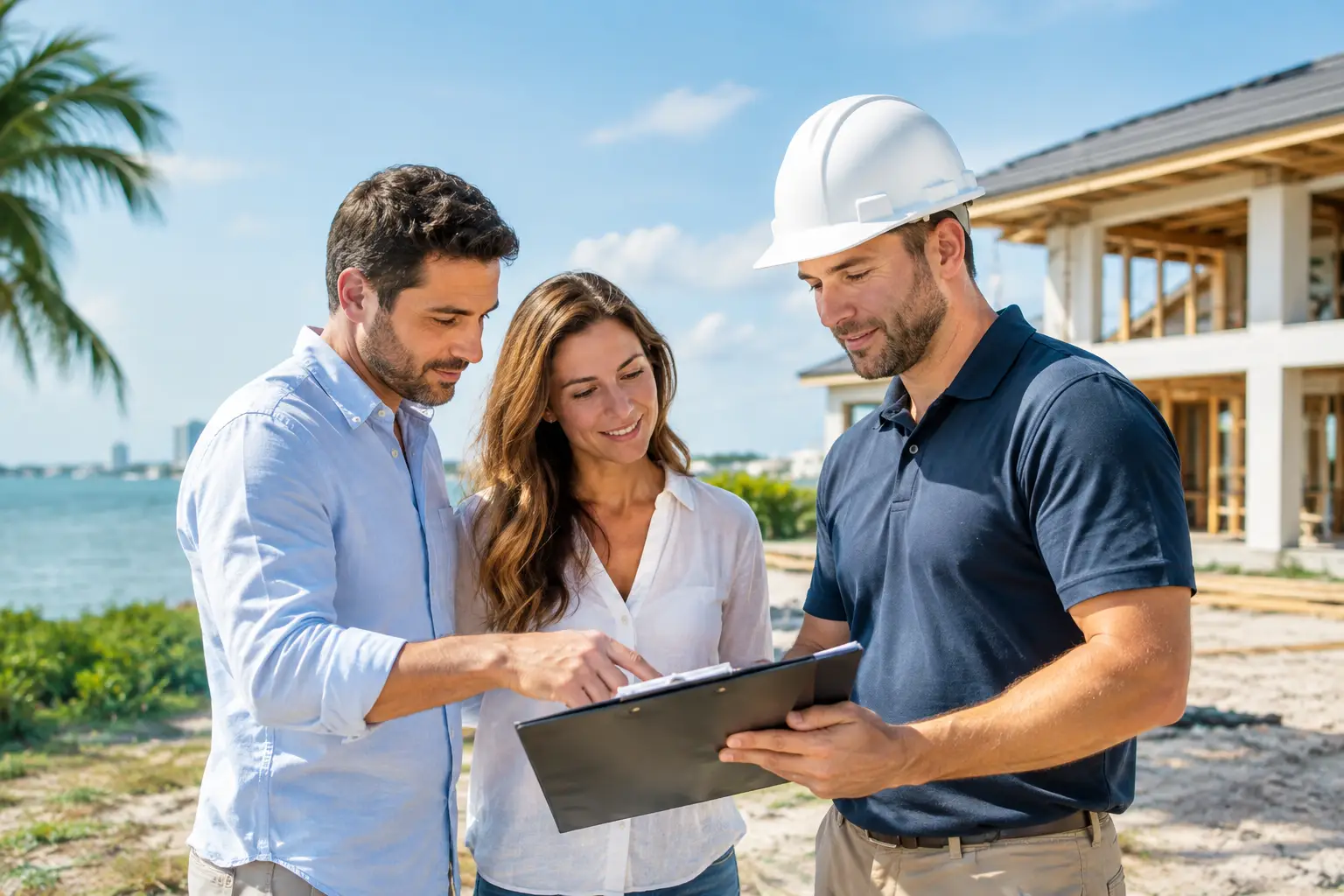
A custom home should reflect the way you live, from how you arrive at the property to where guests gather after sunset. Yet choosing a builder often comes down to a few rushed conversations, a preliminary price, and a portfolio of attractive photos. This custom builder checklist helps Sarasota homeowners look beyond first impressions and evaluate the team, process, scope, and long-term thinking behind a successful home.
The right builder does more than construct walls and install finishes. They coordinate the decisions that shape your experience for years: site planning, drainage, outdoor living, materials suited to Florida’s climate, schedules, budgets, and the many details that turn a plan into a finished property.
Start With Your Property and Priorities
Before comparing builders, clarify what the project must accomplish. A waterfront lot, an established neighborhood property, and a teardown each create different design and construction considerations. In Sarasota, factors such as flood zones, mature trees, drainage, coastal exposure, setbacks, and local architectural character can all affect the plan before construction begins.
Think beyond square footage. Consider how your household uses the home on a typical weekday, how often you entertain, whether aging in place matters, and what outdoor spaces are essential. A covered lanai, pool, outdoor kitchen, guest suite, home office, or expanded garage may carry more value for your lifestyle than a larger formal room.
It also helps to identify your priorities in order. Most homeowners are balancing three realities: desired scope, investment range, and completion timing. A capable builder can help you make informed trade-offs, but only when they understand which elements are fixed and which can evolve.
Custom Builder Checklist: Credentials and Experience
A polished website or a beautiful model home is only one part of the evaluation. Ask direct questions about who will guide the work and how the company operates when conditions change in the field.
Your initial review should confirm the following:
- Proper Florida licensing, insurance coverage, and a clear understanding of local permitting requirements.
- Relevant experience with projects similar in scale, style, location, and construction type to yours.
- A consistent project leadership structure, including who will be your primary contact and who has authority to make decisions.
- A dependable network of subcontractors and suppliers, rather than a team assembled only after the contract is signed.
- A documented approach to quality control, site safety, schedule management, and homeowner communication.
- References from recent clients who can speak to responsiveness, budget management, problem-solving, and the experience after move-in.
Ask to see completed homes, not only work in progress. The details that matter most are often visible after a home has settled into daily use: trim alignment, exterior material transitions, drainage performance, door operation, hardscape condition, and how the landscape complements the architecture.
For a large renovation or addition, experience in occupied homes is especially valuable. Building around an active household requires thoughtful phasing, dust control, site access planning, and realistic expectations about disruptions.
Understand What the Price Includes
Comparing two proposals is difficult when each builder defines the work differently. A lower number may reflect fewer included services, modest allowances, omitted site costs, or a scope that will require later decisions and change orders.
Ask each builder to explain the estimate in plain language. Is it a conceptual budget, a fixed-price proposal, or a cost-plus agreement? What assumptions were used for site preparation, utility connections, permits, engineering, cabinetry, appliances, flooring, lighting, landscaping, and outdoor features? Which selections are represented by allowances, and what happens if your preferred products exceed them?
There is no single contract structure that fits every project. Cost-plus agreements can offer flexibility during a highly custom process, while a fixed-price agreement can provide greater certainty once drawings and selections are thoroughly defined. What matters is that you understand the structure, the builder’s fee, the contingency approach, and the process for approving changes before work proceeds.
Be cautious of a proposal that appears unusually complete before the design has been developed. Early budgets are useful planning tools, but they should be treated as informed estimates, not promises. The more decisions resolved before construction, the more accurate the pricing and schedule can become.
Evaluate the Design and Preconstruction Process
The strongest custom homes are usually shaped well before the first permit is issued. Preconstruction is where the team studies the site, coordinates professionals, develops the budget, and identifies issues that could otherwise become expensive surprises.
Ask whether the builder participates early in design and how they collaborate with architects, interior designers, engineers, and landscape professionals. An integrated team can help connect the home to the full property from the beginning. That may mean planning finished floor elevations with drainage in mind, reserving space for pool equipment, coordinating outdoor lighting, or designing a driveway and entry that feel proportionate to the home.
For many Sarasota properties, the landscape is not an afterthought. It frames the architecture, manages water, provides privacy, and makes outdoor living more enjoyable. When home construction, hardscape, planting, irrigation, lighting, and maintenance are considered together, the result is often more cohesive and easier to care for over time.
At Berryman Design Group, this integrated perspective brings design, building, landscape, and ongoing property care into one accountable process. For homeowners who want a custom residence and a fully considered exterior environment, that continuity can reduce the handoffs that often complicate larger projects.
Ask How Communication Will Work
A custom build involves hundreds of decisions. You should know how information will move among the builder, design team, vendors, and household before the project begins.
Ask how often you will receive updates, whether meetings are scheduled at key milestones, and how approvals are documented. A clear process should cover selection deadlines, budget updates, change orders, site visits, payment draws, and decisions that require your attention. It should also define what happens when a product is delayed, concealed conditions are found, or an inspection requires a revision.
Good communication is not simply frequent communication. It is timely, organized, and candid. A builder should be comfortable raising concerns early, even when the answer is not convenient. That is how small complications remain manageable rather than becoming costly delays.
Review the Schedule With Realistic Expectations
Every homeowner wants to know when construction will finish. A responsible builder will provide a schedule, but will also explain the variables that influence it. Permitting, material lead times, weather, inspection timing, design changes, and unforeseen site conditions can all affect the sequence of work.
Look for a schedule that shows meaningful phases rather than a single completion date. It should address design completion, permitting, site work, foundation, framing, mechanical systems, finishes, exterior improvements, final inspections, and closeout. If you are selling another home or coordinating a move, build some flexibility into your personal timeline.
Florida’s summer weather deserves particular consideration. Drainage planning, site protection, and sensible scheduling help keep work moving, but rain can affect excavation, concrete, roofing, landscaping, and exterior finishes. A builder cannot control the weather, but they should have a practical plan for working through it.
Confirm the Finish Line and the Years After
The final walkthrough should not be the end of the relationship. Ask how punch-list items are recorded and completed, what warranty coverage applies, and how service requests are handled after closing. Keep copies of product warranties, maintenance instructions, paint colors, finish schedules, appliance information, and major system documentation in one accessible place.
You should also ask about the maintenance needs of the property you are creating. Natural stone, wood features, pavers, water features, landscape lighting, irrigation, pools, and coastal plantings all require care. Selecting materials and systems that suit your willingness to maintain them is just as important as selecting materials that photograph beautifully on move-in day.
A custom home is a long-term investment in your property and your daily life. Choose a builder who can explain the process clearly, respect the details that matter to you, and see the home as part of a complete Sarasota setting. That kind of partnership gives your ideas the room to become a home that feels considered from the front drive to the backyard terrace.