

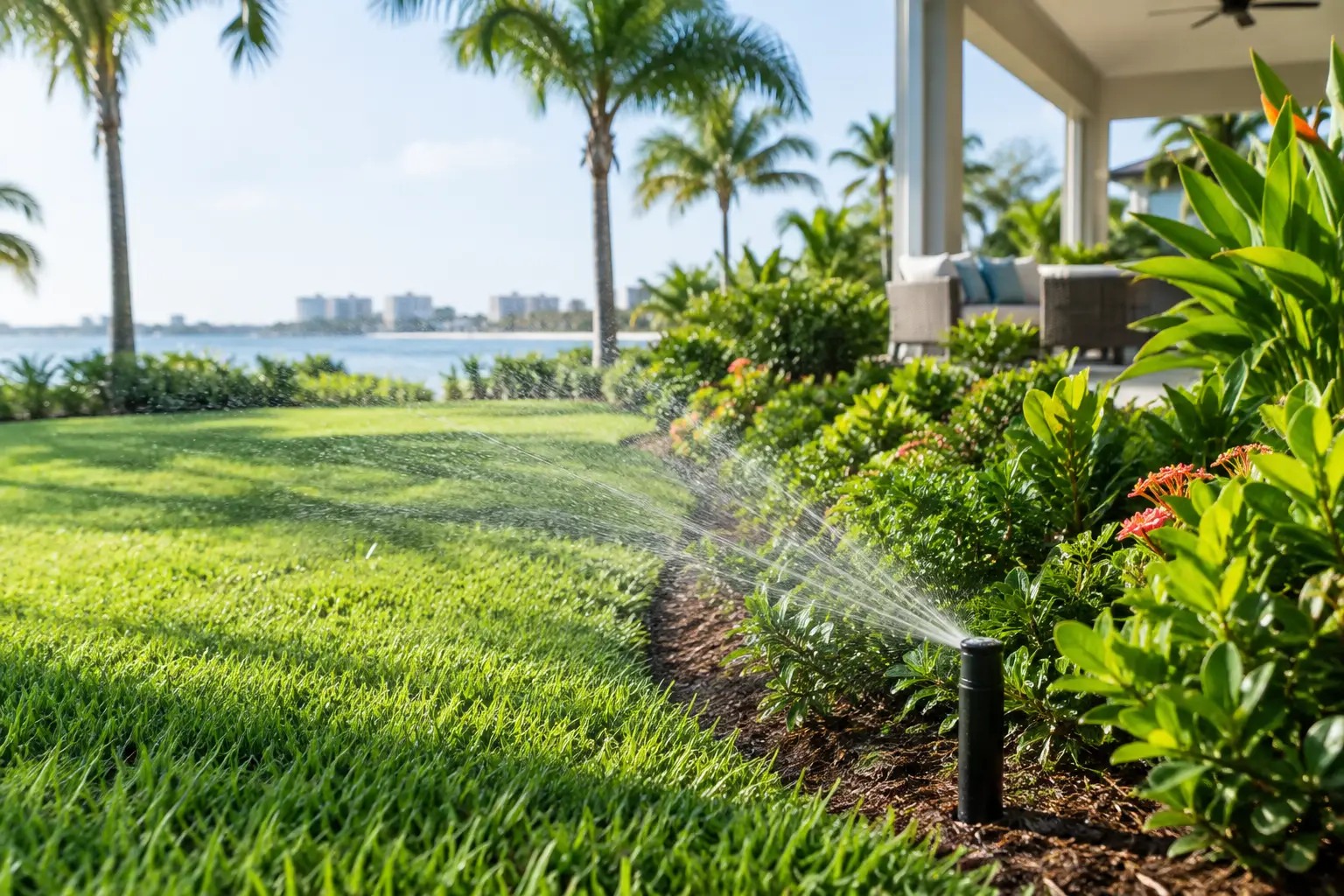
A Sarasota landscape can look perfectly healthy on Monday and show signs of stress by Friday. Between intense sun, sandy soil, summer downpours, salt exposure near the coast, and seasonal watering restrictions, a fixed irrigation schedule rarely gives a property exactly what it needs. Smart irrigation brings more precision to one of the most important systems supporting your home’s outdoor environment.
For homeowners who have invested in custom planting, mature palms, colorful beds, turf, lighting, pavers, pools, or outdoor living spaces, irrigation should do more than turn on at a set time each week. It should respond to actual conditions, protect the landscape investment, and avoid watering when Florida weather has already done the work.
What Smart Irrigation Actually Does
Smart irrigation uses a controller, sensors, weather information, or a combination of these tools to adjust watering schedules based on landscape conditions. Rather than operating on the same timer regardless of rainfall or temperature, the system can reduce, delay, or modify watering when conditions change.
The word “smart” can mean different things depending on the equipment. Some systems use local weather data to account for rainfall, humidity, temperature, and seasonal evapotranspiration. Others rely on rain sensors, soil moisture sensors, flow monitors, or mobile controls. The right approach depends on the property, its planting design, the existing irrigation infrastructure, and the homeowner’s expectations for control and maintenance.
A smart controller is not a substitute for thoughtful landscape design or a properly installed irrigation system. It is a better decision-maker for a system that already has the right zones, coverage, drainage, and plant selection. If a spray head is watering a driveway, a shrub zone is soaking turf, or a low area remains saturated after every storm, technology alone will not correct the underlying problem.
Why Sarasota Properties Need a More Responsive System
Sarasota lawns and gardens deal with conditions that can shift quickly. A hot, dry stretch may call for careful supplemental watering, while a week of afternoon thunderstorms can leave parts of the property overly wet. Running irrigation on a rigid schedule through both scenarios wastes water and can create avoidable stress for turf, trees, and ornamental plants.
Overwatering is often less obvious than a dry lawn, but it can be just as damaging. Excess moisture may encourage fungus, shallow root growth, weeds, nutrient runoff, and root decline in sensitive plant material. It can also leave homeowners puzzled when a landscape looks unhealthy despite receiving plenty of water.
Smart irrigation helps create a more measured response. A properly configured system can skip a cycle after meaningful rainfall, make seasonal adjustments as temperatures rise, and avoid delivering the same amount of water to every part of the property. That matters on homes with a mix of St. Augustine grass, ornamental beds, hedges, palms, citrus, native planting areas, and container gardens. These areas do not all need the same watering schedule.
For a high-value residential property, this is about more than reducing a utility bill. It is about preserving curb appeal, protecting carefully selected plant material, and keeping the outdoor environment ready for everyday enjoyment and entertaining.
The Components That Make Smart Irrigation Work
The controller is usually the center of the system. Modern controllers allow irrigation zones to be programmed independently and can use weather-based adjustments to change runtimes over the course of the year. Many also offer app access, giving homeowners or property managers the ability to check schedules, pause watering, or make adjustments without standing at the controller in the garage.
A rain sensor is a simple but valuable addition. It prevents irrigation from running during or shortly after rain, depending on how it is set. In Florida, where rainfall can be heavy but highly localized, a rain sensor provides useful on-site information that a weather forecast alone may miss.
Soil moisture sensors add another level of accuracy by measuring conditions in the root zone. They can be particularly useful in specialized planting beds or areas where soil conditions vary across the property. However, placement matters. A poorly located sensor can produce misleading information, especially in landscapes with varied sun exposure, mulch depth, slope, or soil amendments.
Flow monitoring can help identify problems that are otherwise difficult to catch. An unexpected increase in water use may signal a broken line, damaged valve, leaking head, or other issue. On larger properties or homes that are vacant part of the year, early leak detection can prevent a small irrigation failure from becoming a significant landscape or water-use problem.
Start With Zones, Not Gadgets
Before choosing equipment, consider how the landscape is divided into irrigation zones. This is where a professional assessment makes a meaningful difference. A healthy irrigation strategy begins with grouping plants that have similar water needs rather than grouping them simply because they are located near one another.
Turf should generally be zoned separately from landscape beds. Established trees and palms often have different needs from annual color or newly installed shrubs. Shaded areas dry more slowly than open lawn, while plantings next to pools, walls, pavers, and driveways can experience added heat. These conditions affect both how much water a zone needs and how often it should run.
A smart controller can only make intelligent adjustments within the structure it is given. If one zone combines lawn, drought-tolerant plants, and thirsty flowering material, the controller still has to choose one schedule for all of them. Correcting zones may require changes to valves, piping, heads, or drip lines, but it can dramatically improve landscape performance over time.
Drip irrigation deserves particular attention in planting beds, containers, and narrow foundation areas. It applies water closer to the root zone and can reduce overspray on walls, walkways, and hardscape. It is not the right solution for every area, and it requires regular inspection for clogs, damage, and coverage gaps. Still, when designed well, it is often a strong complement to a smart irrigation system.
Smart Irrigation Is Not Set-It-and-Forget-It
The greatest misconception about smart irrigation is that it eliminates the need for oversight. It reduces guesswork, but it does not replace routine maintenance or seasonal judgment.
Irrigation heads can be blocked by mulch, grass, or plant growth. Nozzles wear out. Roots can affect lines. Construction projects, new plantings, and changes to outdoor living areas can alter drainage and water needs. Even a well-programmed system should be inspected periodically to confirm that every zone is applying water evenly and only where it belongs.
Homeowners should also expect adjustments after a landscape renovation or installation. New sod, trees, and shrubs require a different establishment schedule than mature material. Once root systems are established, watering should be recalibrated rather than left at the higher frequency needed during the first weeks after planting.
Florida’s weather also requires common sense. A controller using regional weather data may not fully reflect rainfall on your individual property. A passing storm can soak one neighborhood and miss another entirely. Periodic visual checks remain one of the best ways to ensure the landscape is receiving the right amount of water.
Choosing the Right Approach for Your Property
For a smaller, straightforward lawn and garden, a quality smart controller paired with a functioning rain sensor may provide meaningful improvement without extensive changes. For larger homes with multiple landscape areas, guest spaces, pools, extensive hardscape, specialty gardens, or seasonal occupancy, a more comprehensive system with moisture sensing and flow monitoring may be worthwhile.
The best investment is not always the system with the most features. It is the one that matches the property’s design, existing irrigation layout, maintenance needs, and the level of control the homeowner wants. A sophisticated controller installed on an outdated, poorly zoned system may deliver disappointing results. Conversely, a modest upgrade to a well-designed system can make a noticeable difference in water use and plant health.
At Berryman Design Group, irrigation planning can be considered as part of the larger relationship between landscape architecture, construction, planting, and ongoing property maintenance. That perspective helps ensure irrigation supports the finished environment rather than becoming an afterthought once the work is complete.
A well-watered Sarasota landscape should not look overmanaged or constantly saturated. It should feel established, healthy, and appropriate to the property – with turf, trees, and planting beds receiving attention when they need it, not simply when a timer says it is time.