

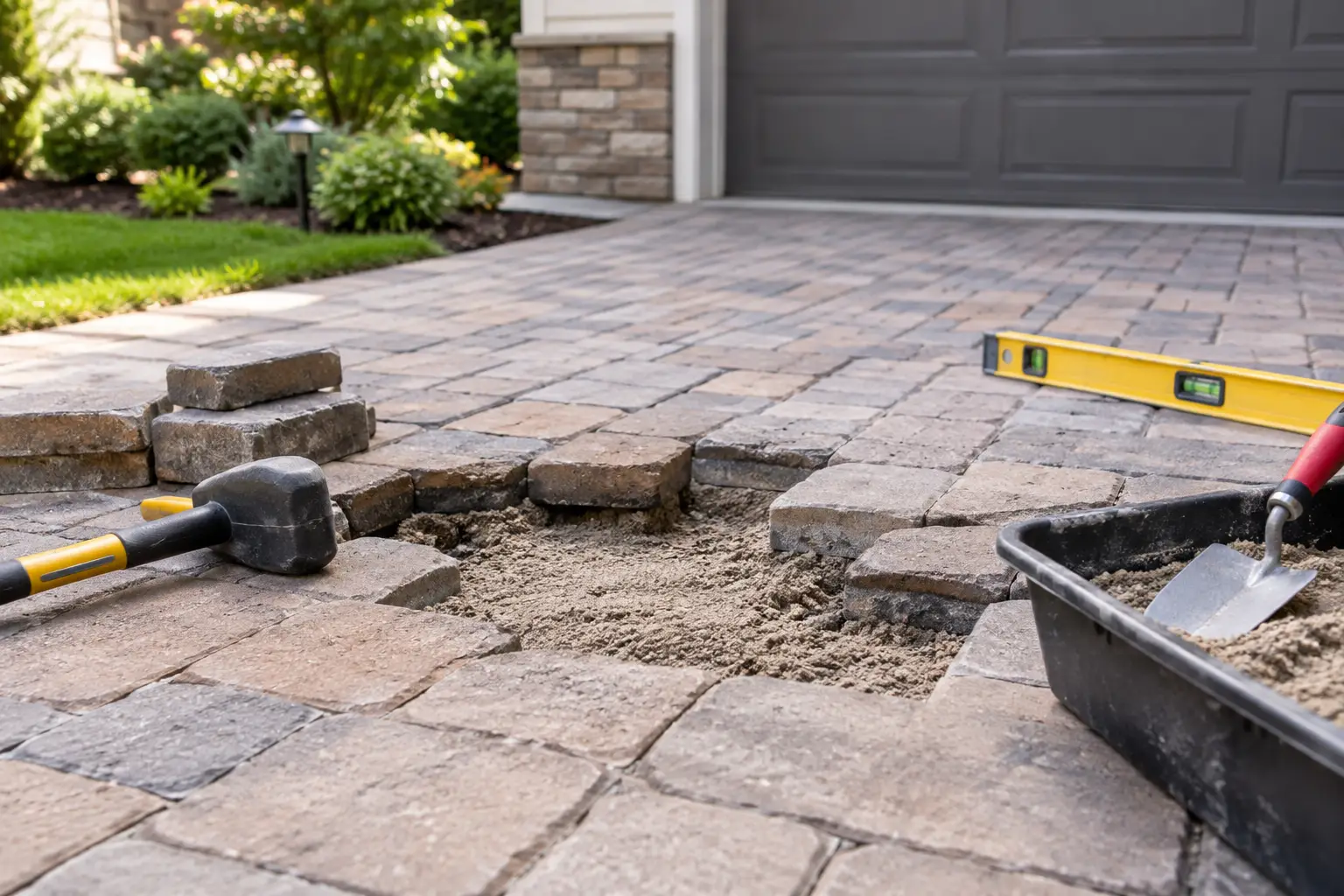
A paver driveway rarely settles for no reason. One low area can collect water after an afternoon Sarasota storm, loosen joint sand, and make a polished front approach feel neglected. To repair a paver driveway after settling properly, the visible dip must be treated as a symptom. The lasting work happens below the pavers, where the base, soil, edging, and drainage either support the surface or allow it to move.
For a small, isolated depression, a targeted repair may be all that is needed. For settling that runs along the garage apron, driveway edge, or multiple wheel paths, a broader evaluation is the wiser investment. The goal is not simply to make the driveway look level again. It is to restore a stable, well-drained surface that complements the home and holds up through Florida’s heat and rain.
Why Paver Driveways Settle
Unlike poured concrete, an interlocking paver driveway is designed as a flexible system. Individual units can be removed and reset, which is one of the material’s best advantages. But that system depends on proper preparation: compacted subgrade, a correctly graded aggregate base, bedding sand, secure edge restraints, and joints filled with sand.
Settling often begins when one of those layers is compromised. In Sarasota and throughout South Florida, heavy rainfall can wash fine material from beneath the driveway or saturate weak subsoil. Water escaping from a damaged irrigation line, roof downspout, or improperly directed drainage outlet can create a localized void. Poor compaction during original installation can also show up years later, especially where vehicles routinely turn, brake, or park.
Tree roots, shifting soil near utility trenches, and failing driveway borders are other common causes. A driveway that slopes toward the house or garage can create more than an appearance issue. Standing water near the foundation, entry, or garage threshold deserves prompt attention.
Assess the Problem Before Lifting Pavers
The pattern of the settlement provides useful clues. A single sunken paver or a small shallow area may point to minor bedding-sand movement. A larger dip involving several rows usually indicates base settlement. Pavers that spread apart, rotate, or creep outward near an edge may signal failed restraints rather than a problem directly underneath the field of pavers.
Walk the driveway after a rainstorm and note where water collects, where it flows, and how long it remains. Look for washed-out joint sand, cracks or separation in the concrete edge restraint, soft landscape beds beside the driveway, and downspouts that discharge too close to the paving. If irrigation is nearby, check for unusually green areas, persistent dampness, or a sudden increase in water use.
It also helps to consider timing. Settlement that appeared soon after a new driveway installation may relate to base preparation or drainage details. A driveway that performed well for many years before developing a dip may have a new cause, such as an irrigation leak, root activity, or erosion at a border.
A professional assessment is especially worthwhile when settlement is widespread, when the driveway meets a garage or retaining wall, or when the cause is not clear. Resetting pavers without correcting a water or base issue can produce a smooth driveway for a season and the same depression later.
How to Repair a Paver Driveway After Settling
A successful repair starts by carefully removing the affected pavers and preserving the pattern. A crew typically begins at an accessible edge or uses specialized tools to lift units without chipping them. Each paver is set aside in order, particularly with multicolor blends, borders, or custom inlays where placement affects the finished appearance.
Remove the Loose Bedding Material
Once the pavers are out, the condition of the bedding layer and base becomes visible. Loose, muddy, contaminated, or washed-out sand should be removed rather than leveled over. If the aggregate base beneath it is soft or visibly uneven, the repair area needs to extend beyond the immediate low spot until stable material is reached.
This is where shortcuts create problems. Adding a thick layer of bedding sand to raise pavers may make the surface look right temporarily, but bedding sand is not intended to compensate for a failed base. Excess sand can shift under vehicle loads and allow the pavers to settle again.
Correct the Cause and Rebuild the Base
If water is the source of the problem, drainage work comes first. That may mean repairing an irrigation leak, redirecting a downspout, adjusting landscape grading, adding drainage collection, or rebuilding an eroded edge. The appropriate solution depends on where the water originates and where it can safely discharge.
The exposed subgrade should be shaped and compacted to create a firm foundation. Then, clean aggregate base material is installed in controlled lifts and mechanically compacted. The final base must match the surrounding elevation while maintaining the intended driveway slope. This is particularly important near garages and entrances, where a small grading error can direct water toward the home.
The depth of reconstruction depends on the extent of the failure and the expected loads. A decorative walkway and a driveway used by SUVs, delivery vehicles, or frequent guests do not require the same structural approach. Paver thickness, soil conditions, and drainage design all influence the right repair detail.
Reset Pavers and Restore the Joints
After the base is stable, a thin, even layer of clean bedding sand is screeded across the repair area. The pavers are reset in the original pattern, checked against adjacent surfaces, and cut as needed for a precise fit at edges. The finished surface should be level across the repair while still following the designed slope for drainage.
Joint sand is then swept into the spaces between pavers, and the area is compacted with appropriate equipment to seat the units and consolidate the joints. Polymer-modified joint sand can be useful in many driveway applications because it helps resist erosion and weed growth. It must be selected and installed correctly, however, since drainage characteristics, paver type, and joint width matter.
Finally, edge restraints should be inspected and repaired where needed. These restraints keep the paved field interlocked under traffic. A driveway can have an excellent base and still begin to spread if its borders are not secure.
When a Spot Repair Is Not Enough
Targeted repairs are practical when the damage is localized and the underlying cause has been corrected. They are often the most efficient way to address a settled area around a downspout, a repaired irrigation line, or a small section affected by root removal.
A full or partial driveway rebuild may be the better choice when dips appear in several locations, pavers are extensively uneven, or the original driveway has broad drainage deficiencies. It may also make sense when homeowners are planning a larger front-yard renovation, new landscape lighting, updated entry walkways, or a change in driveway layout. Addressing grading, hardscape, and planting together can create a more cohesive result than repairing each issue separately over time.
There is a cost trade-off. A spot repair has less immediate disruption and expense, but it cannot solve hidden weaknesses beyond the repaired zone. A larger reconstruction requires more investment, yet it gives the project team an opportunity to rebuild the supporting system, improve water management, and refresh aging pavers or borders at the same time.
Protect the Repair From Future Settlement
After the driveway is repaired, water management remains the most effective form of prevention. Keep downspouts and landscape drainage outlets from emptying directly onto or beneath the paver field. Maintain irrigation so overspray and leaks do not saturate driveway edges. If adjacent planting beds are raised, confirm that soil and mulch are not washing onto the pavers or trapping water along the border.
Regular inspection is simple but valuable. Replenish joint sand when it becomes low, address loosening edge restraints early, and watch for changes after major storms. Pressure washing can improve appearance, but aggressive cleaning can remove joint sand if it is done carelessly. The driveway should be cleaned with its structure in mind, then re-sanded as needed.
For homeowners planning a more comprehensive property update, Berryman Design Group can coordinate driveway repair with drainage, landscape architecture, irrigation, and surrounding outdoor improvements. That unified approach helps ensure the driveway is not treated as an isolated surface when the real issue may involve the larger property.
A level paver driveway should feel effortless: water moves where it should, vehicles park on a stable surface, and the entry complements the home from the curb to the front door. Repairing the base and drainage correctly gives that result a far better chance of lasting.