

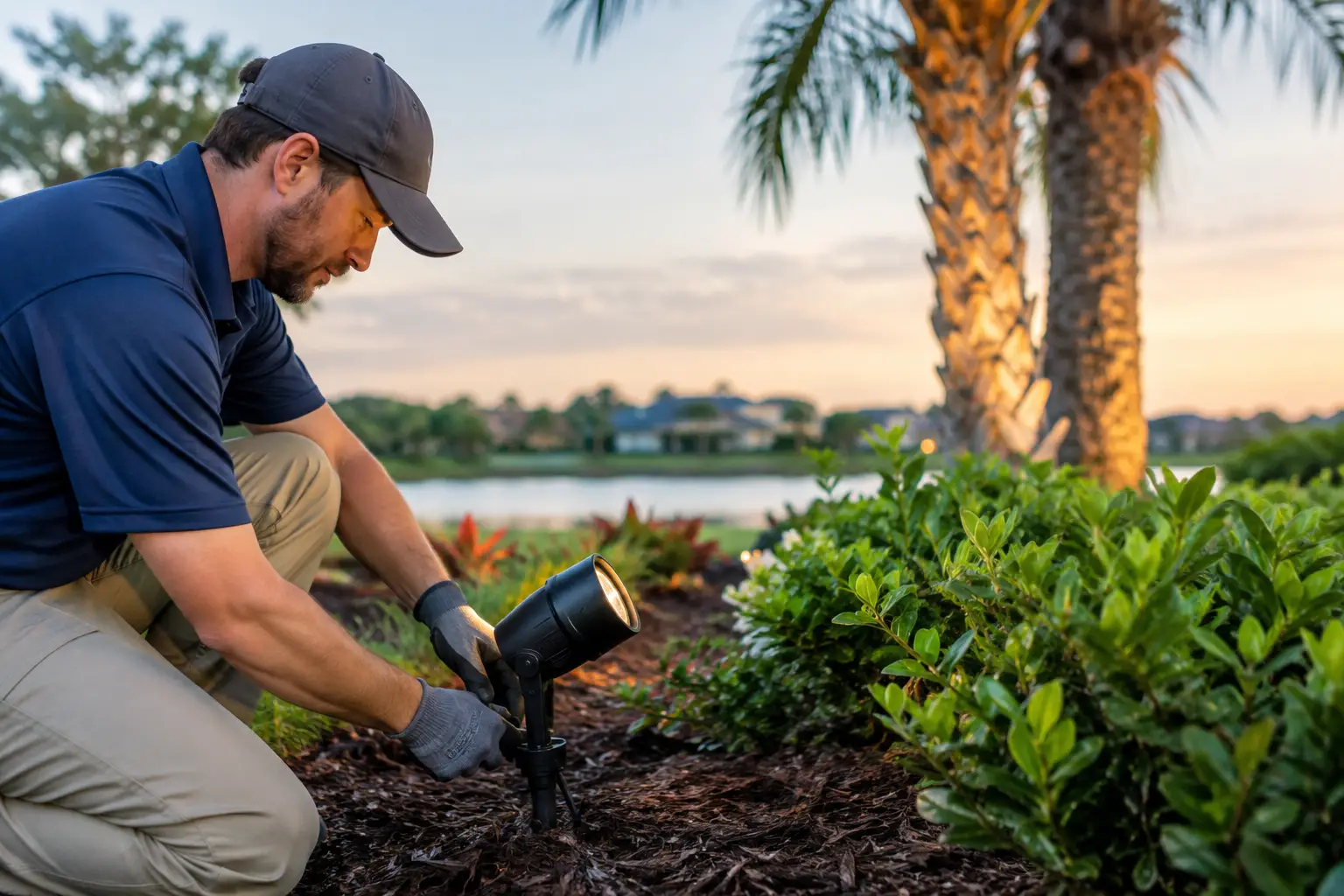
A landscape lighting system can look perfectly composed on installation day, then slowly lose its effect under Florida sun, summer rain, salt air, and fast-growing plant material. Learning how to maintain landscape lighting protects more than evening curb appeal. It keeps pathways usable, draws attention to the right architectural details, and helps your property feel as considered after dark as it does during the day.
For Sarasota homeowners, maintenance is not a once-a-year chore. It is a practical routine of keeping fixtures clean, plants in scale, connections dry, and the nighttime design aligned with the way you use the property.
Start With a Nighttime Walk-Through
The most useful inspection happens after sunset. Turn on the entire system and walk the property slowly, beginning at the street and moving toward entry paths, outdoor living areas, pool decks, and garden spaces. Look for dark patches, overly bright hotspots, fixtures that shine into windows, and lights that are no longer aimed at the feature they were meant to highlight.
Landscape lighting is often affected by gradual changes that are easy to miss. A palm may grow into the beam of an uplight. A shrub can conceal a path light. Mulch may settle around a fixture, changing its angle or blocking its lens. What worked beautifully during the original installation may need thoughtful adjustment as the landscape matures.
Pay close attention to safety lighting near steps, grade changes, driveways, and walkways. These areas should be comfortably visible, not washed out with glare. If a fixture produces harsh light or casts distracting shadows, repositioning it or changing the lamp may produce a better result than simply adding more fixtures.
How to Maintain Landscape Lighting Fixtures
Florida weather leaves a mark on outdoor materials. Pollen, irrigation overspray, mulch, soil, and mineral deposits can collect on lenses and fixture bodies. Every few months, switch off the system and allow fixtures to cool before cleaning them with a soft cloth, mild soap, and water. Avoid abrasive pads and harsh chemical cleaners, which can scratch lenses or damage protective finishes.
Clear leaves, mulch, and debris from around each fixture. This is especially important for well lights and in-grade fixtures, where standing water and trapped organic matter can obscure the beam or create drainage problems. Make sure lenses are seated properly and that fixture covers have not cracked.
Brass and copper fixtures naturally develop a patina. Many homeowners appreciate that weathered appearance, particularly in established gardens and coastal-inspired settings. If you prefer a brighter metal finish, use a cleaner designed specifically for the fixture material. The decision is largely aesthetic, but any cleaning method should preserve the integrity of the fixture rather than strip it aggressively.
Check stakes and mounting hardware as well. A fixture that leans after a heavy rain may not be damaged, but its beam can be noticeably off target. Reset it carefully, taking care not to pull on the wire beneath the soil.
Keep Plant Growth From Changing the Design
A well-designed lighting plan and a healthy landscape must be maintained together. In Sarasota, warm temperatures and seasonal rain can create rapid growth around trees, hedges, groundcovers, and flowering beds. Regular pruning keeps light where it belongs and prevents foliage from resting against warm fixtures.
This does not mean cutting plants back indiscriminately. The goal is to maintain the original visual relationship between the plant, hardscape, home, and light. A canopy may be intentionally lit from below to show its structure, while a hedge might be softly grazed to create depth along a property line. Prune selectively so the lighting continues to support the landscape architecture rather than compete with it.
Plants should also have room around fixtures for air circulation and service access. Dense groundcover can hide equipment until a bulb fails or a connection needs attention. Keeping a small, clean zone around each fixture makes routine inspections simpler and helps prevent moisture from lingering where it should not.
Check Lamps, Transformers, and Timers
LED landscape lighting has a long service life, but it is not maintenance-free. When a fixture is dimmer than surrounding lights, flickers, or fails to turn on, inspect the lamp and connections before assuming the entire fixture needs replacement. Use lamps with the correct voltage, wattage, beam spread, and color temperature for the system.
Color consistency matters more than many homeowners expect. Replacing one warm 2700K lamp with a cooler white lamp can make that fixture stand out for the wrong reason. For a cohesive residential setting, keep replacement lamps consistent with the existing design. If several lamps are nearing the end of their useful life, replacing a group at once can prevent a patchwork appearance.
The transformer should be checked periodically for secure connections, signs of corrosion, and proper operation. It should remain protected from sprinklers, pooling water, and landscape debris. If your system includes a photocell, timer, or smart controller, confirm that the schedule still matches the season and your household routine. Sarasota’s changing sunset times may warrant minor timer adjustments throughout the year.
A system that turns on before dusk wastes energy and can look out of place. One that turns off too early may leave guests navigating a dark driveway or patio. Smart controls can make scheduling easier, but they still benefit from an occasional review.
Protect Wiring and Connections From Water
Low-voltage systems are designed for outdoor use, yet Florida’s heavy rain makes proper drainage and sealed connections essential. During inspections, look for exposed wire, damaged insulation, loose connectors, or fixtures sitting in persistently wet soil. A light that works intermittently after rain often points to a connection or moisture issue that deserves prompt attention.
Irrigation heads are another common concern. Sprinklers should not spray directly onto lighting fixtures, lenses, transformers, or connection points. Repeated overspray can leave mineral buildup, encourage corrosion, and shorten the life of components. Coordinate irrigation adjustments with lighting maintenance, especially after a landscape renovation or plant replacement changes the watering pattern.
Do not bury wire connections in a way that makes them impossible to access. Professional-grade, weather-rated connectors are designed to protect the connection while allowing future service. If you find a damaged cable or suspect a voltage drop across a long run, involve a qualified landscape lighting professional. Electrical troubleshooting is not the place to rely on a temporary fix.
Adjust for Storm Season and Coastal Conditions
Before hurricane season, inspect fixtures near trees, large planters, gates, and freestanding landscape elements. Secure or reset any loose stakes, and remove branches that could fall onto fixtures or cables. After a major storm, wait until standing water has receded before checking the system, then inspect for shifted fixtures, damaged branches, exposed wiring, and tripped controls.
Homes closer to Sarasota Bay or the Gulf may need more frequent attention because salt air accelerates corrosion. Material selection becomes especially valuable in these settings. Solid brass, copper, and high-quality composite fixtures usually hold up better than inexpensive painted metal products, though every material benefits from regular rinsing and inspection.
Know When a Professional Review Is Worth It
Some landscape lighting tasks are straightforward: cleaning lenses, trimming plants, resetting fixture angles, and reviewing timer settings. Others call for a trained eye. Repeated lamp failures, uneven brightness across a run, frequent breaker or transformer issues, water intrusion, and aging fixtures are all reasons to schedule a professional evaluation.
A lighting review can also be valuable after a new pool, patio, driveway, outdoor kitchen, or landscape renovation. Adding one feature often changes how the entire property is used at night. Rather than placing a few extra lights where darkness feels most obvious, a coordinated plan can preserve visual balance, improve safety, and avoid an overlit result.
At Berryman Design Group, landscape lighting can be maintained as part of a broader approach to the property, alongside planting, irrigation, hardscape, and outdoor living improvements. That coordination matters because the strongest nighttime environments are not created by lighting alone.
A few minutes spent walking the property after dark can reveal what daytime maintenance cannot. Keep the system clean, clear, dry, and properly aimed, then let the light do its quiet work: welcoming guests, extending the use of your outdoor spaces, and giving your home a refined presence long after sunset.