

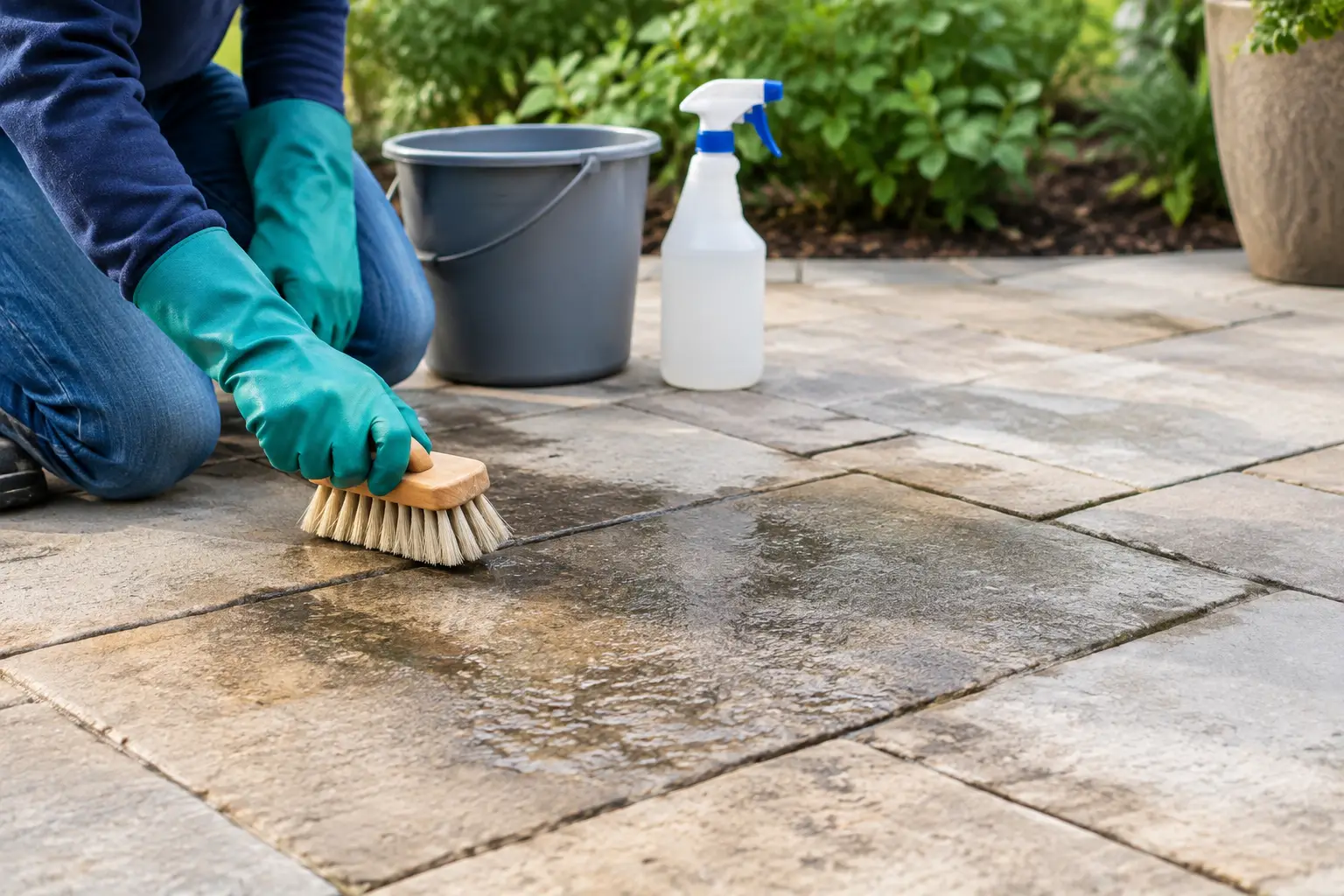
A beautiful paver terrace, pool deck, or driveway can make an entire Sarasota property feel more finished. But one rust ring beneath a planter, a dark spill from the grill, or blackened areas near a shaded wall can pull attention away from the design. Knowing how to remove stains from patio pavers without damaging the surface, joint sand, or surrounding landscape is what separates a quick cleanup from an expensive repair.
The right approach depends on two things: what caused the stain and what your pavers are made of. Brick, concrete, natural stone, and travertine do not respond the same way to water pressure or cleaning products. Start conservatively, test every cleaner in an inconspicuous location, and give the stain treatment time to work before reaching for stronger solutions.
Identify the Stain Before You Clean
Patio stains often look alike after a Florida summer, especially when rain, irrigation, humidity, and shade are involved. Yet treating a stain with the wrong product can set it deeper, bleach the paver, or leave an uneven patch that is more noticeable than the original mark.
Oil and grease are usually dark and may leave a slightly slick feel. They commonly appear beneath outdoor kitchens, grills, parked vehicles, and golf carts. Organic stains from leaves, berries, palm fruit, mulch, algae, mildew, or tannins are often brown, green, or black. Rust is typically orange or reddish brown and may come from metal furniture, fertilizer, irrigation water, or a forgotten tool.
Efflorescence is different. This chalky white film is caused by mineral salts moving through concrete or masonry as moisture evaporates. It is not dirt, and scrubbing with a general-purpose cleaner often does little. Paint, mortar, and tire marks also require their own methods. When a stain covers a large area, has returned several times, or appears connected to an irrigation issue, the source deserves attention as much as the paver surface.
How to Remove Stains From Patio Pavers Step by Step
Begin by clearing furniture, pots, and loose debris from the area. Sweep thoroughly so grit does not scratch the pavers during cleaning. Protect nearby plant material, and avoid allowing cleaning runoff to collect in planting beds, pools, fountains, or storm drains.
Wet the pavers with a garden hose before applying most cleaners. Pre-wetting helps prevent the product from soaking too quickly into porous material and makes the treatment more even. Use a stiff nylon-bristle brush rather than a wire brush, which can scar concrete and scratch certain stone surfaces.
Work in manageable sections, particularly on large pool decks and entertaining areas. Rinse thoroughly after treatment and let the pavers dry completely before deciding whether another application is necessary. Wet pavers can hide remaining discoloration or make a lightened area appear darker than it will once dry.
Oil and grease stains
For a fresh spill, absorb as much oil as possible immediately with an absorbent material made for oil cleanup. Do not rub the spill outward. Once the surface oil is lifted, apply a paver-safe degreaser according to its directions, allow the recommended dwell time, scrub gently with a nylon brush, and rinse.
Older oil stains may need repeated treatment because oils travel below the visible surface. A poultice-style product can be useful for deep stains on porous pavers, drawing the contaminant upward as it dries. Be patient with this process. Aggressive pressure washing may make the stain look better briefly while stripping joint sand or roughening the paver face.
Mildew, algae, and organic discoloration
Sarasota’s warmth and humidity make shaded patios, walkways, and pool enclosures especially prone to organic growth. A cleaner formulated for pavers and outdoor masonry can remove algae and mildew effectively when used carefully. Follow the product label, keep it off desirable plants, and rinse surrounding areas well.
If algae returns quickly, cleaning alone is not the complete answer. Trim back dense plantings that keep the patio damp, correct sprinkler overspray, clear blocked drainage paths, and consider whether a nearby downspout is concentrating water along the paver edge. Better air movement and drainage protect both the hardscape and the landscape around it.
Avoid relying on chlorine bleach as a routine paver cleaner. It can affect color, harm adjacent vegetation, and create runoff concerns. It may also leave the underlying moisture problem untouched.
Rust stains
Rust requires a dedicated rust remover that is labeled for the specific paver material. This is particularly important for natural stone and travertine, which can be damaged by acidic products. Apply only where needed, follow the stated dwell time, and rinse generously.
Do not use muriatic acid as a casual solution for rust, efflorescence, or general staining. While it can create a dramatic immediate change, it can also etch surfaces, alter color, weaken mortar, damage nearby finishes, and create significant safety risks. On a premium hardscape installation, the risk rarely justifies the shortcut.
Once the stain is gone, locate the cause. Metal furniture feet should have protective caps, planters should be raised slightly to allow drainage, and irrigation should be checked for iron-rich water or overspray. A stain that keeps returning is often a maintenance or site-condition issue rather than a cleaning failure.
White haze and efflorescence
Start with dry brushing and plain water for light efflorescence. For persistent deposits, use a cleaner specifically intended for masonry efflorescence and suitable for your paver type. Apply it sparingly and test first, because some products can change the appearance of colored concrete or textured surfaces.
Efflorescence can be temporary in newer installations as materials dry and salts migrate outward. Repeated heavy deposits, however, can point to persistent moisture below or behind the pavers. Drainage, base preparation, irrigation patterns, and edge conditions may need professional evaluation.
Use Pressure Washing With Restraint
Pressure washing can refresh a paver surface, but it is not automatically the safest or best treatment for every stain. Excessive pressure can erode the paver face, dislodge joint sand, expose the bedding layer, and create an uneven appearance. On older brick or softer natural stone, the damage can be permanent.
If pressure washing is appropriate, use a wide fan tip, keep the wand moving, and maintain a consistent distance from the surface. Never concentrate the stream in one spot or aim directly into joints. After a more thorough cleaning, joint sand may need to be replenished. If polymeric sand is used, it must be installed under the correct dry conditions and activated precisely as directed.
For large patios, driveways, or pool decks, professional cleaning is often the more controlled choice. An experienced team can match the method to the material, protect adjacent finishes and landscaping, restore joints where needed, and identify drainage or irrigation conditions that are contributing to the staining.
Prevent Future Paver Stains
A regular maintenance routine is easier on pavers than occasional aggressive cleaning. Sweep away leaves and landscape debris before they break down and leave tannin marks. Rinse food and drink spills promptly after gatherings. Move planters periodically, use saucers or risers that allow air beneath them, and avoid placing bare metal directly on the pavers.
Sealing can help reduce absorption and simplify cleanup, but it is not a cure-all. The right sealer depends on the paver material, finish, exposure, and desired appearance. Some sealers deepen color or add sheen, while others maintain a more natural look. Improper application can trap moisture, create blotchiness, or leave a slippery finish around pools, so product selection and preparation matter.
Irrigation deserves equal attention. Sprinklers should water planting beds and lawns, not patio surfaces, walls, furniture, or driveways. Fine-tuning spray patterns, repairing leaks, and keeping drainage routes clear will do more for long-term paver appearance than repeated cleaning treatments.
A well-maintained hardscape should support the way you use your home, not become another demanding project on the calendar. When stains persist or the pavers no longer look consistent with the rest of the property, a thoughtful assessment can restore the surface while protecting the landscape and outdoor living spaces built around it.