

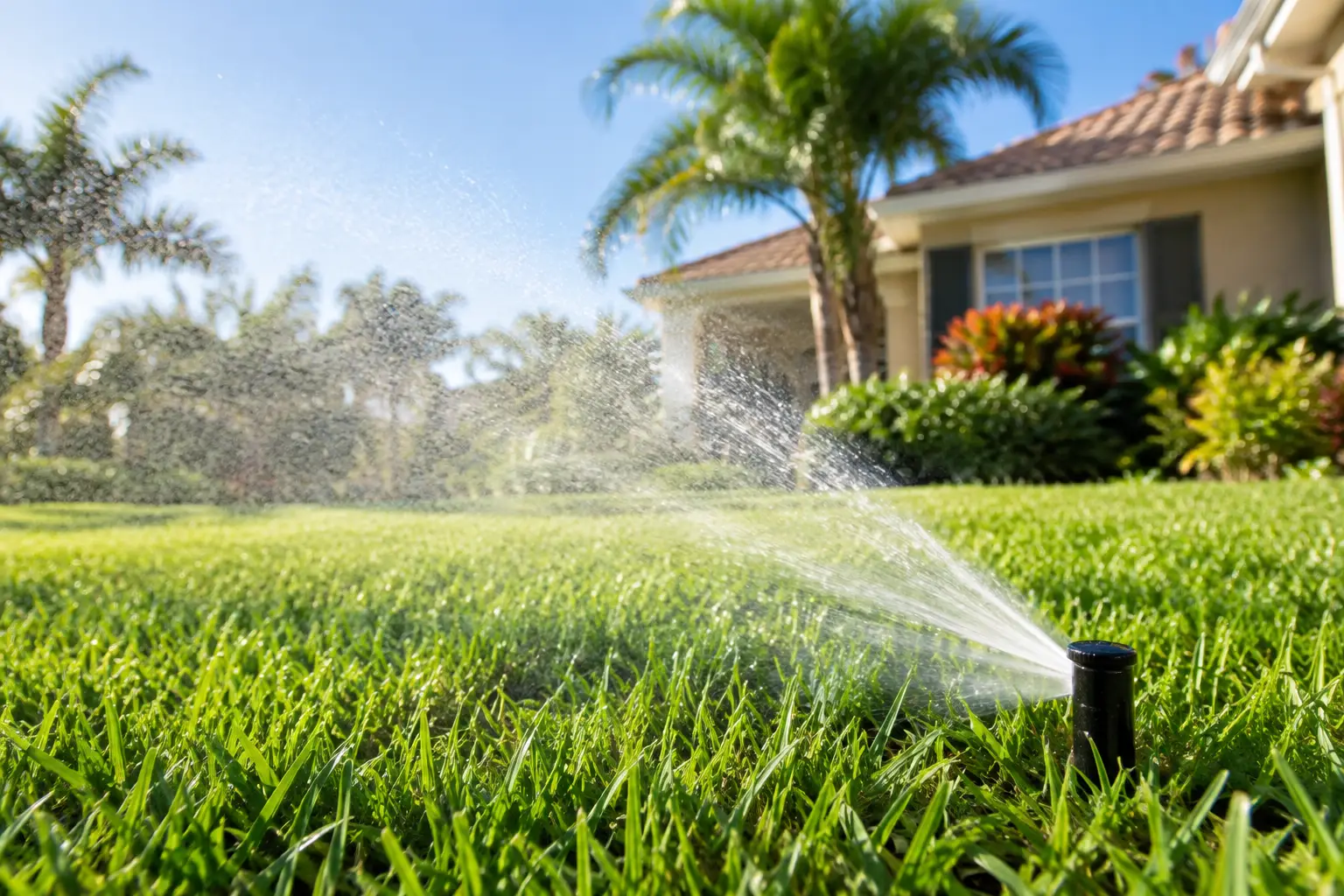
A Florida lawn can look lush one week and stressed the next, even when the irrigation system runs on schedule. Sarasota’s sandy soils, intense sun, summer rain, and changing seasonal temperatures make a fixed watering routine unreliable. Knowing how often to water a Florida lawn means responding to the grass, the weather, and the way water moves through your particular property.
For most established lawns, the goal is not daily watering. It is deep, purposeful watering that encourages roots to grow down into the soil, where they are better prepared for heat and short dry spells. A lawn that receives a little water every day may stay green temporarily, but it often develops shallow roots and becomes more dependent on the irrigation system.
How Often to Water a Florida Lawn in Sarasota
As a general rule, an established Florida lawn needs about three-quarters to one inch of water per week, including rainfall. During dry periods, that amount is usually best applied in one or two irrigation cycles rather than several light applications. In Sarasota, a twice-weekly schedule may be appropriate during a dry spring or fall period, while a single weekly watering may be enough when weather is mild and the lawn is holding moisture well.
Summer requires more restraint than many homeowners expect. Afternoon storms can deliver substantial water in a short time, and irrigation should be adjusted accordingly. Running sprinklers on top of frequent rainfall wastes water, can saturate the root zone, and may contribute to disease pressure in St. Augustinegrass and other warm-season turf varieties.
During the cooler, drier months, lawns generally grow more slowly and use less water. Many properties need irrigation only when the lawn shows signs of drought stress. The correct schedule is always subject to local watering restrictions, which can change by municipality, season, or drought conditions. Check the current requirements that apply to your address before setting or changing irrigation days.
New sod, fresh seed, and recently installed plantings follow a different schedule. They need more frequent, lighter watering at first because their root systems have not yet established themselves. That frequency should be reduced steadily as roots take hold. Keeping new sod constantly wet for too long can be as damaging as letting it dry out.
Water Deeply Instead of Watering Every Day
Florida’s sandy soil drains quickly. That is one reason a lawn can appear dry soon after a brief sprinkler cycle, even though the system has run every morning. The answer is usually not to add more days. It is to make sure each irrigation event delivers enough water to reach the active root zone.
For most turf, water should moisten the soil roughly 6 to 8 inches deep. Depending on sprinkler type, nozzle output, wind exposure, and soil conditions, that may take 30 to 60 minutes per zone. There is no universal runtime because irrigation systems vary widely from one property to another.
A simple catch-can test can reveal what your system is actually delivering. Place several straight-sided containers around a lawn zone, run the sprinklers, and measure the water collected. This shows whether coverage is even and how long it takes to apply the desired amount. It also exposes common problems such as clogged nozzles, tilted heads, overspray onto driveways, or one area receiving far more water than another.
If water begins to pool, run off toward the street, or collect along a paver edge, divide the runtime into shorter cycles with a break between them. This cycle-and-soak approach gives water time to enter the ground instead of leaving the property. It is especially useful on compacted areas, slopes, and lawns with mixed sun and shade.
Let Rainfall and Lawn Conditions Set the Schedule
An irrigation controller should support the lawn, not replace observation. Rain sensors and smart controllers can prevent watering during or immediately after rain, but they still need to be programmed correctly and checked periodically.
Watch for early drought signals between scheduled watering days. Grass blades may fold lengthwise, turn a dull blue-gray color, or fail to spring back after being walked on. These are better indicators than simply seeing a few brown tips, which may be caused by mowing stress, insect activity, disease, fertilizer burn, or uneven sprinkler coverage.
Too much water creates its own warning signs. A consistently soggy lawn, yellowing grass, mushrooms, increased weeds, and patchy decline can all point to excess moisture or poor drainage. In a shaded yard, watering needs may be dramatically lower than they are in an open, south-facing lawn. A mature oak canopy, a pool deck, a new addition, or a row of hedges can change how quickly different parts of the landscape dry out.
Best Time of Day to Water a Florida Lawn
Water in the early morning, ideally around sunrise through mid-morning. Temperatures are lower, winds are often calmer, and the lawn has time to dry after irrigation. This helps the water reach the soil instead of evaporating quickly in afternoon heat.
Avoid nighttime watering when possible. Moisture that remains on grass blades overnight can encourage fungal disease, particularly during humid summer weather. Watering in the late afternoon is also less effective because heat, wind, and rainstorms can make the application uneven.
A well-designed irrigation system should deliver water to the lawn and planting beds, not to the house, hardscape, or street. Besides wasting water, overspray can leave mineral deposits on pavers, create slippery surfaces, and contribute to unnecessary wear around foundations and outdoor living areas.
Grass Type Changes the Watering Conversation
St. Augustinegrass is common across Sarasota and performs beautifully in the right setting, but it needs attentive irrigation management. It generally benefits from deep watering when it shows drought stress, especially in full sun. Overwatering can make it more vulnerable to disease and root problems.
Zoysiagrass often has good drought tolerance once established, though its dense growth can require careful attention to coverage. Bahiagrass is typically more drought-tolerant and may not need the same level of supplemental irrigation as a highly manicured St. Augustine lawn. Bermudagrass performs well in sunny areas but can struggle where tree shade is significant.
Your lawn’s variety is only one part of the equation. Soil compaction, thatch buildup, shade, drainage, mowing height, and fertilizer practices all affect how much water it needs. A lawn that is mowed too short, for example, loses moisture faster and has fewer leaf blades to support healthy root growth.
Check the Irrigation System Before Adding More Water
When one section of lawn declines while another looks healthy, adding irrigation time across the entire property is rarely the right first move. The issue may be a broken rotor, blocked nozzle, damaged pipe, low pressure, poor zone design, or plant growth obstructing spray patterns.
Walk the property while each zone is running at least once or twice a year. Look for sprinkler heads that have settled below grade, nozzles spraying into shrubs, heads blocked by mulch, and dry pockets along driveways, walkways, or pool enclosures. These small corrections can make a substantial difference in lawn health and water use.
For larger properties, a professional irrigation review is often worthwhile when landscaping has matured or outdoor spaces have been renovated. New trees, expanded patios, retaining walls, and altered drainage can all affect an older system’s performance. The best irrigation plan is coordinated with the landscape design, hardscape, drainage, and maintenance needs of the entire property.
A Better Routine for a Better-Looking Property
A Florida lawn does not need constant watering to look refined. It needs the right amount of water, delivered evenly, at the right time, with adjustments for rain, season, and site conditions. That approach protects turf health while supporting the polished, well-maintained setting that makes outdoor spaces more enjoyable and helps preserve curb appeal.
If your lawn cycles between overly wet and chronically dry, the answer may be more than a controller adjustment. Berryman Design Group can help evaluate how irrigation, drainage, planting design, and ongoing landscape maintenance work together so your property performs as beautifully as it looks.